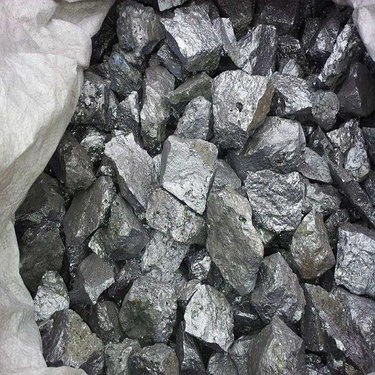
If you've ever walked past a steel mill or held a car part, a construction beam, or even a kitchen knife, you've probably interacted with ferro silicon without realizing it. As a ferro silicon supplier, I spend a lot of time talking about how our product makes those industries work-from the steel industry's backbone to hidden downstream uses. But lately, more and more customers have asked me a question that's been on everyone's mind lately: what's the environmental footprint of making this stuff?

I get it. Global climate goals aren't just buzzwords anymore. Every step of manufacturing, from sourcing raw materials to shipping the final product, has an impact. The good news is that ferro silicon production is a process that's evolved a lot over the past 20 years-and it's got both big, well-known environmental challenges and some underrated areas where suppliers are making real progress. Let's break this down like I'd explain it to a fellow supplier or a steel mill engineer, no stuffy jargon required.
First, let's start with the basics of how ferro silicon is made, because you can't talk about its environmental impacts without understanding the raw materials and process. Ferro silicon is an alloy of silicon and iron, usually mixed to have 75% silicon (75FeSi is the most common grade) or 50% silicon (50FeSi, used for lower-strength steel applications). To make it, you heat high-purity silica (that's silicon dioxide, right? The same stuff in sand or quartz), coke (a carbon-rich coal product), and iron ore in a giant electric arc furnace (EAF) to super high temperatures-like 1,800°C (3,270°F) hot enough to melt the rock. The reaction separates the silicon from the oxygen in the silica, and mixes it with the iron from the ore to make the alloy. That's the core process.
Now, the biggest environmental hit here? Energy use. Those EAFs are power hogs. I've worked with furnaces that pull 20 to 30 megawatts of electricity for an eight-hour shift. That's enough power to run 15,000 average U.S. homes for a day. Back in the day, most of that electricity came from coal-fired power plants, which meant every ton of ferro silicon produced spiked emissions of carbon dioxide (CO2), the main greenhouse gas driving climate change. The numbers are stark: traditional coal-powered ferro silicon plants produce roughly 10 metric tons of CO2 for every ton of 75FeSi they make. For a mid-sized plant that cranks out 50,000 tons a year, that's 500,000 tons of CO2 annually-equivalent to the emissions of 108,000 gas-powered cars driven for a year.
But here's the thing: that's not set in stone. More suppliers are switching to renewable-powered grids now-wind, solar, hydro, even natural gas with carbon capture. Last year, a friend who runs a ferro silicon plant in Iceland (where almost all electricity is from geothermal and hydro) told me their CO2 emissions are less than 1 ton per ton of ferro silicon. That's a 90% cut from traditional operations. It's a huge shift, but it also comes with a big catch: renewable electricity isn't available everywhere, and transporting low-carbon ferro silicon to customers can add some supply chain emissions. We're working on that by sourcing local power when we can and optimizing shipping routes to cut down on fuel use.
Next up, emissions beyond CO2. Ferro silicon production isn't just a CO2 problem-there are other air pollutants that have big local and global impacts. First, there's silica dust. Wait, not the nice silica powder you can buy for lab use or concrete mixes, but the fine particulate matter (PM2.5) that gets released when you heat raw silica. Those tiny particles are less than 2.5 micrometers wide-so small they can get deep into your lungs and even enter your bloodstream, causing respiratory issues. Back in the 1990s, dust control was basically just a big filter on the furnace exhaust, but now we use baghouses and electrostatic precipitators that catch 99.9% of that dust. The leftover filtered silica isn't wasted, either-we sell it as Silica Powder for concrete additives, water treatment, and even cosmetics. That's a win-win: no more dust going into the air, and we're reducing waste instead of sending it to landfills.
Then there's the other big emissions: carbon monoxide (CO) and volatile organic compounds (VOCs). The coke used in the furnace breaks down at high temperatures, and when there's not enough oxygen to fully burn it, it releases CO, a toxic gas that can be fatal in high concentrations. Older furnaces used to just vent CO directly into the atmosphere, but modern plants capture that gas and use it as fuel to heat the EAF itself-so instead of wasting energy, they're recycling the emissions into power for the process. A lot of plants also recover VOCs from the off-gas and reuse them, which cuts down on both air pollution and the need for extra fuel. It's like turning a waste product into a resource-genius, if you ask me.
Now, what about waste? Every industrial process produces some waste, and ferro silicon is no exception. The biggest byproduct is slag, a glassy, molten material that floats on top of the molten ferro silicon in the furnace. Once the silicon is poured out, the slag cools into solid chunks. For a long time, that slag was just dumped in landfills. But today, it's a valuable product. We sell our processed Ferro Alloy Siliconislag as a raw material for cement production, road base, and even as a fertilizer additive (it has small amounts of silicon that's good for crop growth). We also turn some of it into Off-the-shelf Slag Remover for steel mills, which makes cleaning up slag from steel ladles faster and easier. The amount of waste going to landfills from our operations has dropped by 85% in the past 10 years, which is a number I'm really proud of.
Wait, but there's a less talked about part: water use and contamination. Ferro silicon plants need a lot of water to cool the EAF and the molten metal. Traditionally, a plant would pull millions of gallons of fresh water from rivers or lakes every year, and some of it would get contaminated with heavy metals or unburned coke, so it had to be treated before being released back. Now, most modern plants use closed-loop water systems-they recycle 95% of the water they use, so they barely need to take in new water. That's a huge deal for areas with water scarcity. We've invested in our own closed-loop system too, which cuts our water use by 90% compared to our old facility. The small amount of water we do need to discharge is tested regularly, and it meets or exceeds all EPA (or local regulatory) standards.
Of course, no process is perfect, and there are still challenges we're all working on. One big one is the mining of raw materials. The silica we use comes from quartz mines, and coke comes from coal mines, both of which have their own environmental impacts-soil disturbance, water pollution, and greenhouse gas emissions from transport. We're working with our raw material suppliers to source from mines that use sustainable practices, like reforesting mined areas and reducing transport emissions by sourcing locally. Some newer ferro silicon plants are even experimenting with using hydrogen instead of coke as a reducing agent, which would cut CO2 emissions almost to zero because hydrogen only produces water vapor when it reacts with silica. That tech is still in the early stages, but I'm excited about where it's going.
Another challenge is the end-of-life of products that use ferro silicon. Wait, ferro silicon is mostly used as an alloying agent in steel, right? It makes steel stronger, more durable, and resistant to corrosion. When steel products like cars or buildings reach the end of their life, they get recycled-and ferro silicon in the steel is fully recyclable too. So it's not like the emissions from ferro silicon production are locked into a product that's thrown away and forgotten. For that matter, if you want to learn more about how ferro silicon powers the steel industry, you can check out our page on the Use Of Ferro Silicon in Steel Industry.
As a supplier, I don't just care about making a good product-I care about making it in a way that doesn't hurt the planet. I know a lot of customers are looking for partners that prioritize sustainability, and that's exactly what we're building here. We're always investing in new tech, optimizing our processes, and working with our suppliers to lower our collective footprint. If you're a steel mill, construction company, or any business that needs high-quality ferro silicon, Alloy Cored Wire (another product we offer for steel manufacturing) or any of our ferro silicon solutions, we'd love to chat about how we can meet your needs while working toward shared sustainability goals.
Let's wrap this up real quick. The environmental impacts of ferro silicon production are real, but they're not fixed. Thanks to advances in energy, waste recycling, and pollution control, we've come a long way from the days of high-emission, high-waste plants. There's still work to do-we're not where we need to be yet-but the progress we've made in the last two decades gives me hope. For anyone in the industry, choosing a supplier that invests in sustainable practices isn't just good for the planet-it's good for your business, too, because more and more customers are demanding low-carbon materials. If you want to talk about our products, our sustainability efforts, or place an order, get in touch with our team today. We're here to help.
References
- International Energy Agency (IEA). (2022). Ferro Alloys Technology Roadmap. IEA Publications.
- World Steel Association. (2023). Environmental Footprint of Steelmaking, Annex: Ferro Silicon Production.
- U.S. Environmental Protection Agency (EPA). (2021). Air Pollution Control for Ferromanganese and Ferrosilicon Production.
- Ferro Alloy Producers Association (FAPA). (2022). Sustainable Practices in Primary Ferro Silicon Manufacturing.