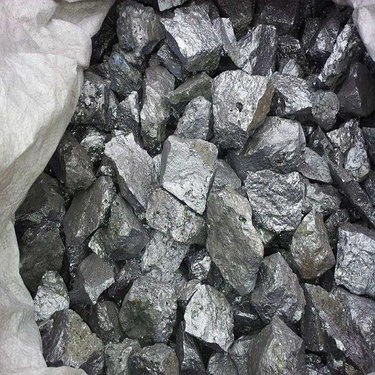
If you've ever held a lightweight, rust-resistant car part, a durable aerospace component, or even a high-performance cooking pan, there's a good chance silicon metal played a quiet but critical role in making that part better. As someone who works in the silicon metal supply game, I get asked all the time: how exactly does adding this stuff to aluminum alloys level up their performance? It's not as simple as just dumping a little silicon in a melt-there's actual metallurgy at play here, and it's why so many industries rely on our product, whether it's Metallurgical Grade Silicon Metal for large-scale alloy production or other grades for niche uses. Let's break it down without the boring jargon, so even if you're not a metallurgist, you'll get it.
First, let's start with the basics: aluminum alone is great for lots of things-it's light, non-toxic, and easy to shape-but it has flaws. Pure aluminum is soft, it doesn't hold up super well to high stress, and it doesn't cast as smoothly when you're making complex parts like engine blocks or gear housings. That's where alloying comes in. Mixing aluminum with other elements (like silicon) tweaks its atomic structure to fix those weak spots. Silicon is the star here because it plays nice with aluminum at the microscopic level, and the grade you use matters a lot. If you're making aluminum alloys for casting, for example, Industrial Grade Silicon Metal is usually the go-to because it's pure enough (around 97-99% Si) to give consistent results without the extra cost of higher-purity options.
Let's talk casting first. This is one of the biggest uses for aluminum-silicon alloys, especially in the automotive industry. When you melt aluminum and add silicon, the melting point drops. Pure aluminum melts at around 660°C, but mix in 12-15% silicon, and that drops to just over 570°C. Lower melting point means you don't have to heat the metal as much to cast it, which saves energy, cuts down on waste, and makes it easier to fill tiny, intricate molds. But that's just the start. The way silicon distributes in the aluminum matrix is key. If you let silicon form big, chunky crystals (called primary silicon), that can actually make the alloy brittle-like if you have little shards of glass in a soft plastic. Good suppliers (like us) know how to process silicon metal to add it at the right time, so the silicon breaks into tiny, uniform particles instead. That not only makes the cast parts smoother but also boosts their strength. We even have a grade for refractory uses, Silicon Metal For Refractory Materials, but that's a side gig-our main focus is keeping that silicon distribution tight for aluminum alloys.
Next up, strength. Aluminum-silicon alloys (often called Al-Si alloys) end up being way stronger than pure aluminum, even without adding other elements like magnesium or copper. The tiny silicon particles act like little "pinning points" in the aluminum's grain structure. Grains are just the tiny crystals that make up a metal, and if they're too big, the metal is weaker. When you add silicon, it stops those grains from growing too large-this is called grain refinement, and it's a game-changer. I've seen engine blocks made with these alloys that can handle way more pressure than pure aluminum ones, which is why cars can be lighter without sacrificing durability. For industries like aerospace, where every pound counts, this strength-to-weight ratio is non-negotiable. A lighter engine means better fuel efficiency, which is why so many automakers are switching to Al-Si alloys these days.
Wait, there's another big benefit: reduced thermal expansion. Let's say you have a part that gets hot (like an engine cylinder) and then cools down. If the material expands and contracts a lot, it can warp, crack, or lose its seal. Silicon helps here because it has a much lower coefficient of thermal expansion than aluminum. So when you mix them, the alloy expands way less than pure aluminum. That's huge for parts that go through constant heating and cooling-they stay precise longer. I remember a customer in the motorcycle industry telling us their pistons used to wear out fast because of thermal expansion, but switching to our Al-Si alloy with the right Metallic Silicon grade fixed that. The pistons didn't warp anymore, so they lasted twice as long.
Don't sleep on corrosion resistance either. Aluminum is naturally corrosion-resistant because it forms a thin oxide layer on its surface, but adding silicon actually makes that layer even more stable. Silicon reacts with oxygen to form a silicon-oxide layer that's denser and more protective than pure aluminum's oxide. That means parts made with Al-Si alloys don't rust or degrade as easily, even in harsh environments-like marine applications, where saltwater is everywhere. Boats use a lot of these alloys for hull parts and fittings, and that extra corrosion resistance is why they don't need as much maintenance. Even for consumer stuff, like outdoor furniture, the alloy lasts way longer than pure aluminum.
Now, let's get real about the mistakes people make here. Too much silicon, and the alloy gets brittle-like I said earlier, those big primary silicon crystals are bad. Too little, and you don't get the strength or thermal benefits. That's why suppliers need to know exactly how much to add, and what grade to use. For example, if you're making wrought aluminum alloys (the kind you shape by rolling or forging, not casting), you usually use less silicon (around 1-3%) than for casting alloys (10-20%). And for high-precision parts, you might need a purer grade of silicon metal to avoid impurities that can mess up the alloy's properties. That's where our expertise comes in-we don't just sell silicon metal; we work with customers to figure out the right grade, amount, and processing to fit their specific alloy needs.
Another thing: silicon metal slag, which is a byproduct of our production process, does have some uses too, but that's not for aluminum alloys. But for our customers, the main value is in how our silicon turns regular aluminum into something that can handle way more than it could on its own. Let's put this into perspective: a typical car has around 200 pounds of aluminum, most of which is an Al-Si alloy. Without silicon, that car would be heavier, less fuel-efficient, and parts would break more often. Same with airplanes, trains, even consumer electronics-those slim, durable phone frames? They're often made with Al-Si alloys, too.
So why is this such a big deal right now? The push for sustainability is driving industries to make lighter parts to cut emissions. Aluminum alloys with silicon help with that-lighter vehicles mean less fuel use, lighter electronics mean less energy in production and shipping. At our company, we're all about making that possible. If you're a manufacturer working on aluminum alloys and you want to know which silicon metal grade is right for your next project, or you just have questions about how we can help improve your alloy's performance, don't hesitate to reach out. We're here to make the process smooth, from picking the right product to making sure it delivers the results you need.


Before I wrap up, let me add a quick note: I've been in this game for over a decade, and I've seen firsthand how small tweaks in silicon addition can make a huge difference in an alloy's performance. It's not just a commodity-it's a critical component that's shaped modern manufacturing. Whether you're casting engine parts, forging aerospace components, or making consumer goods, silicon metal is the unsung hero making those products better, lighter, and longer-lasting.
References
- ASM International. (2019). Aluminum-Silicon Alloys. In ASM Handbook: Properties and Selection: Nonferrous Alloys and Special-Purpose Materials (Vol. 2, pp. 123-145). ASM International.
- Campbell, J. (2015). Casting Methods and Metallurgy. Butterworth-Heinemann.
- Nace, R. (2020). Thermal Expansion Characteristics of Aluminum-Silicon Alloys. Journal of Materials Engineering and Performance, 29(6), 3892-3901.
- World Aluminum Association. (2022). Sustainable Aluminum Alloys for Lightweight Transportation. Aluminum Association.