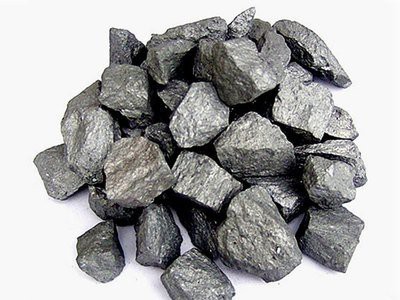
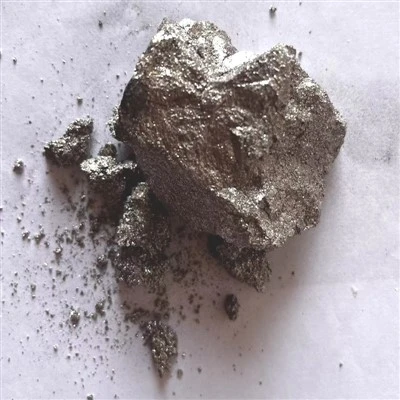
Silicon carbide (SiC) has become a game - changer in various industries, and the capacitor production field is no exception. As a leading silicon carbide supplier, I've witnessed firsthand how this remarkable material has revolutionized capacitor manufacturing. In this post, I'll dig into how silicon carbide is used in capacitor production and why it's such a big deal.
Silicon Carbide Basics
Before we get into capacitor production, let's quickly go over what silicon carbide is. It's a compound made up of silicon and carbon, and it's got some awesome properties. SiC has high hardness, great thermal conductivity, and remarkable chemical stability. These properties make it a top - choice material in many high - performance applications.
You can find different types of silicon carbide, and some of our products include Silicon Carbide 90%. The high percentage indicates a purity level that ensures consistent performance in different applications. Also, we offer Silicon Carbide Particle Size 0 - 10, where the specific particle size can be tailored to meet the requirements of various manufacturing processes.
Why Silicon Carbide in Capacitors?
Capacitors are essential components in electronic circuits. They store and release electrical energy, which is crucial for the proper functioning of devices. Traditional capacitor materials have their limitations when it comes to high - power, high - temperature, and high - frequency applications. That's where silicon carbide comes in.
One of the main advantages of using silicon carbide in capacitors is its excellent thermal conductivity. In high - power applications, capacitors generate heat. If this heat isn't dissipated properly, it can lead to a decrease in performance and even damage the capacitor. Silicon carbide can quickly transfer heat away from the capacitor, keeping it at a stable temperature and ensuring reliable operation.
Another great property is its high breakdown voltage. The breakdown voltage is the maximum voltage a capacitor can withstand before it fails. With silicon carbide, capacitors can handle much higher voltages compared to those made with traditional materials. This makes them suitable for high - voltage applications such as power transmission and electric vehicle charging systems.
Using Silicon Carbide in Capacitor Production
Dielectric Material
The dielectric is the insulating material between the capacitor's plates. It determines the capacitor's capacitance and its ability to store electrical energy. Silicon carbide can be used as a dielectric material because of its high dielectric constant. A higher dielectric constant means the capacitor can store more charge for a given voltage.
When using silicon carbide as a dielectric, it's important to have a uniform and high - quality layer. Our Silicon Carbide Abrasive Powder can be processed to create a fine powder that is used in the deposition process. The powder is carefully applied and then treated to form a smooth and consistent dielectric layer. This layer helps to improve the capacitor's performance and reliability.
Electrodes
Silicon carbide can also be used in the electrodes of capacitors. Electrodes are the conductive parts that store the electrical charge. The high conductivity of silicon carbide makes it an ideal candidate for electrode materials.
In capacitor production, the silicon carbide electrodes are fabricated to have a specific shape and structure. The Silicon Carbide Powder Uses can be extensive in electrode manufacturing. For example, the powder can be sintered to form a dense and conductive electrode. The resulting electrodes not only have good electrical conductivity but also high mechanical strength, which is important for withstanding the electrical and mechanical stresses during the capacitor's operation.
Impact on Capacitor Performance
The use of silicon carbide in capacitor production has a significant impact on the performance of the capacitors.
Firstly, in high - frequency applications, silicon carbide - based capacitors can handle much higher frequencies compared to traditional capacitors. This is because of its low dielectric loss. Dielectric loss is the energy that is lost as heat when the capacitor is charged and discharged at high frequencies. With silicon carbide, this loss is minimized, allowing the capacitor to operate efficiently at high frequencies. This is crucial for modern communication systems, where high - frequency signals need to be processed accurately.
Secondly, silicon carbide capacitors have a longer lifespan. Thanks to their high thermal conductivity and chemical stability, they can withstand harsh operating conditions better than traditional capacitors. This means fewer replacements and lower maintenance costs in the long run.
Production Capacity
As a silicon carbide supplier, we are well - aware of the importance of production capacity. Our Production Capacity Of Silicon Carbide is designed to meet the growing demand for silicon carbide in capacitor production. We've invested in advanced manufacturing equipment and have a skilled team to ensure a steady supply of high - quality silicon carbide products.
Conclusion
Silicon carbide has truly transformed the capacitor production industry. Its unique properties, such as high thermal conductivity, high breakdown voltage, and low dielectric loss, make it an ideal material for high - performance capacitors. Whether it's used as a dielectric or an electrode material, silicon carbide brings significant improvements in terms of performance and reliability.


If you're in the capacitor production business or any other industry that requires high - quality silicon carbide products, we'd love to talk. We're here to provide you with the best silicon carbide solutions tailored to your specific needs. Contact us today to start a conversation about how we can work together.
References
- Chowdhury, M. S., & Bhuyan, M. H. (2019). Silicon Carbide: A Review on Properties, Processing and Applications. International Journal of Applied Ceramic Technology, 16(1), 83 - 100.
- Gupta, R. K., & Baliga, B. J. (2015). Silicon Carbide Power Devices: Fundamentals, Technology and Applications. Springer.