

If you have ever stood by a steel mill's arc furnace as molten metal pours from the ladle, you've probably heard workers talk about "desulfurization" like it's a dark art-one that Calcium Silicon is key to mastering. As a Calcium Silicon supplier, I've spent years talking to steelmakers who rely on our products to clean their metal, improve ductility, and prevent defects. But here's the thing: too much of a good thing is a recipe for problems, and Calcium Silicon is no exception. I've seen first-hand what happens when operators overdo additions, from unexpected slag inconsistencies to reduced steel quality. Today, I want to pull back the curtain on the side effects of using too much Calcium Silicon in steel production, and what every steelmaker needs to know to get it right.
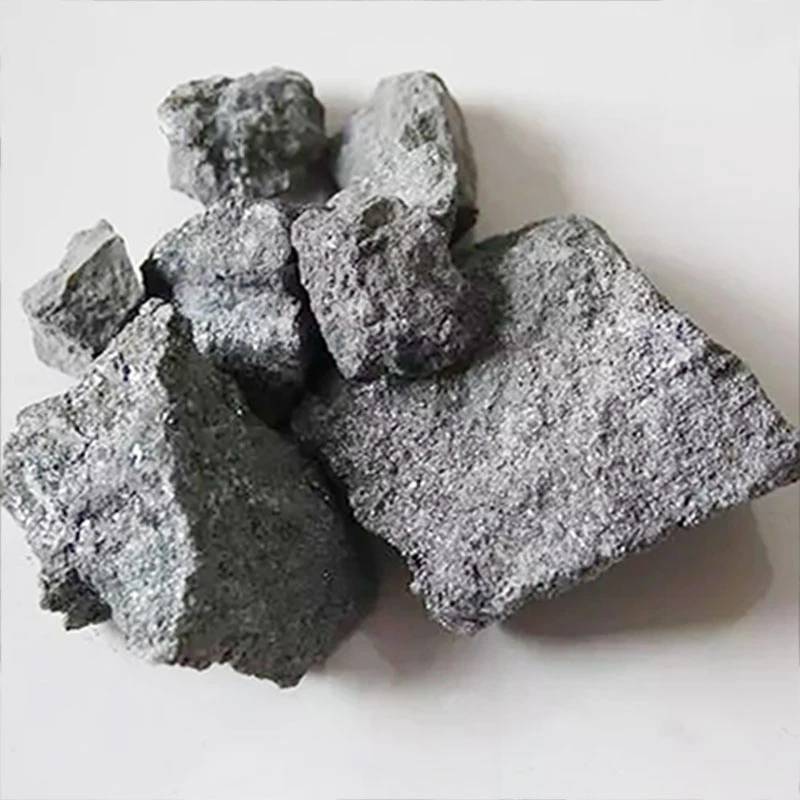
First, let's ground this in what Calcium Silicon actually does. When added to molten steel, it's a powerful deoxidizer and desulfurizer-critical steps because oxygen and sulfur in steel cause brittleness, cracking, and poor long-term performance. Calcium reacts with sulfur to form calcium sulfide, a solid that floats out of the steel, while silicon helps tie up excess oxygen. Many steelmakers use different forms of this alloy to fit their process: for bulk additions, they might use bulk Silicon Calcium Alloy, while for fine-tuning, Calcium Silicon Particles or Silicon Calcium Powder work better in injection systems. Our team at the supplier has spent years perfecting these products-check out our details on Silica-calcium Alloy to learn more about how our raw material quality sets us apart. We also source our raw materials responsibly, including operating a Gypsum Mine that ensures the purity of the calcium we use in our blends.
Now, the line between "effective" and "too much" is thinner than most new operators realize. Let's start with the most immediate side effect: adverse slag reactions. Slag is the byproduct of deoxidation and desulfurization, and it's supposed to separate cleanly from the molten steel. But when you add excess Calcium Silicon, the slag's chemistry shifts drastically. Calcium is a reactive element-it has a low boiling point (around 1,484°C) that's just slightly higher than typical steelmaking temperatures (1,500–1,600°C). If you add too much, the surplus calcium doesn't just react with sulfur or oxygen; it starts reacting with the slag's oxides, like SiO2 and Al2O3, in ways that make the slag thicker, more viscous, or even foam uncontrollably. I saw this happen at a mid-sized steel plant last year: their operator added 20% more Calcium Silicon than recommended to hit a super-low sulfur target, and the slag foamed so much that it spilled over the furnace ladle, shutting down production for three hours. The result? Not just lost time-they had to reprocess the entire heat, wasting thousands of dollars in energy and material. Excess slag can also trap tiny steel droplets, reducing yield and increasing material waste, which is a hit to both cost and sustainability.
Next, there's the issue of inclusions in the final steel. Inclusions are non-metallic particles that get trapped in the steel during processing-small ones are usually harmless, but large or irregular ones cause serious defects. The whole point of Calcium Silicon is to turn harmful oxygen and sulfur inclusions (like alumina) into spherical calcium aluminates or calcium sulfides that float out. But when you add too much, this process goes haywire. Excess calcium doesn't just modify existing inclusions-it creates new ones that are harder to remove. I've tested steel samples from a plant that over-added Silicon Calcium Powder, and their inclusions were 2–3 times larger than the industry average, and irregularly shaped. These inclusions act like stress raisers, making the steel more prone to cracking during rolling or forming. For steel used in automotive parts or construction, where durability is non-negotiable, this can lead to product recalls or field failures. Another problem: excess silicon from over-adding Calcium Silicon can increase the silicon content of the steel beyond the specification, which affects its mechanical properties. For example, high silicon makes steel more brittle at low temperatures, a big issue for steel used in Arctic pipelines or cold-formed parts.
Wait, there's a less talked-about side effect that hits long-term equipment performance: refractory wear. Refractories are the heat-resistant linings of furnaces and ladles, designed to withstand 1,500°C molten steel. Calcium is highly reactive with refractory materials, especially magnesium oxide (MgO) and aluminum oxide (Al2O3) bricks. When you add excess Calcium Silicon, the free calcium in the molten metal reacts with the refractory, forming low-melting-point compounds that erode the lining faster. I worked with a supplier last quarter that was having to replace their ladle refractories every 2 weeks, compared to the standard 6 weeks-turns out their operator was adding 15% too much Calcium Silicon during each heat. The extra calcium ate through the lining's MgO grains, creating gaps where molten steel could seep in, leading to premature failure. Replacing refractories is a huge cost-each ladle lining can cost $50,000 or more, so the added wear from overusing Calcium Silicon isn't just a maintenance hassle; it's a major expense.
Let's also address the myth that "more is better" for desulfurization. Many steelmakers think that adding extra Calcium Silicon will get them a sulfur level of zero, but that's impossible in practice, and the effort is counterproductive. Sulfur in steel is measured in parts per million (ppm)-typical targets are 10–50 ppm for most steel grades. Adding enough Calcium Silicon to push sulfur below 5 ppm requires precise control, because beyond a certain point, the desulfurization reaction plateaus. The law of mass action says that once the sulfur has reacted with all available calcium, any extra calcium won't help-instead, it causes the side effects we've already discussed. I had a customer who tried to hit 2 ppm sulfur by adding double the recommended amount of Silicon Calcium Alloy, and they only got down to 7 ppm, with worse slag and more inclusions. They ended up switching to a two-step desulfurization process: a primary addition of Calcium Silicon for bulk sulfur, then a smaller secondary addition of Calcium Silicon Particles to fine-tune, which saved them 12% on material costs and improved their steel quality.
So how do you avoid these side effects? From my experience as a supplier, it's all about three things: testing, tracking, and matching the right Calcium Silicon product to your process. First, every steel mill's furnace, ladle size, and steel grade are different, so there's no universal "right amount." You should conduct small-scale trials with varying addition levels, test the resulting steel's chemistry, inclusions, and slag properties, and set a target based on your specific needs. Second, track every addition: log how much Calcium Silicon you add per heat, the sulfur and oxygen levels before and after, the slag condition, and refractory wear. This data will help you spot trends-like if adding more than 10 kg of Calcium Silicon per ton of steel leads to slag foaming in your ladle. Third, pick the right form of Calcium Silicon for your stage of processing. For bulk desulfurization in the furnace, bulk Silicon Calcium Alloy works well because it melts and reacts slowly, giving you control. For secondary desulfurization in the ladle, fine Calcium Silicon Particles or Silicon Calcium Powder are better because they dissolve faster, so you can add smaller, more precise amounts without excess leftover calcium. Our product pages have more details on each type, so feel free to check our Silicon Calcium Alloy and Calcium Silicon Particles pages for specifications tailored to different processes.
As a Calcium Silicon supplier, our job isn't just to sell you a product-it's to help you use it effectively. We've seen too many steelmakers suffer from over-addition issues, and we want to change that. If you're dealing with slag problems, inclusions, or refractory wear that you think might be linked to Calcium Silicon additions, or if you just want to optimize your process to reduce waste and improve quality, we're here to help. We can provide custom blends of Calcium Silicon, guide you through trial processes, and share data from our years working with steel mills across the industry. Whether you're a small plant looking to fine-tune your desulfurization or a large mill managing multiple grades, we can work together to find the right balance. Don't let overusing Calcium Silicon derail your production or cost you money-reach out, and let's talk about how we can support your operation.
References:

- The Making, Shaping and Treating of Steel, 11th Edition. AISE Steel Foundation, 2003.
- "Calcium Treatment of Steels: Principles and Practices." Steel Research International, vol. 82, no. 10, 2011, pp. 1122-1135.
- Refractory Materials for Iron and Steelmaking, 2nd Edition. CRC Press, 2018.
- "Desulfurization of Molten Steel with Calcium Alloys." Journal of Metals, vol. 65, no. 7, 2013, pp. 897-905.
- "Effect of Excess Calcium Additions on Inclusion Modification in Low-Carbon Steel." ISIJ International, vol. 57, no. 6, 2017, pp. 1012-1019.


