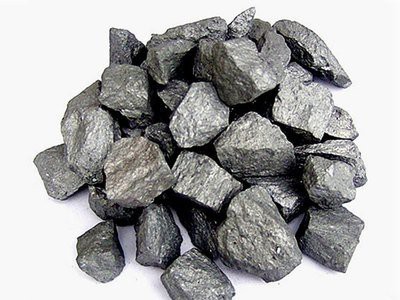
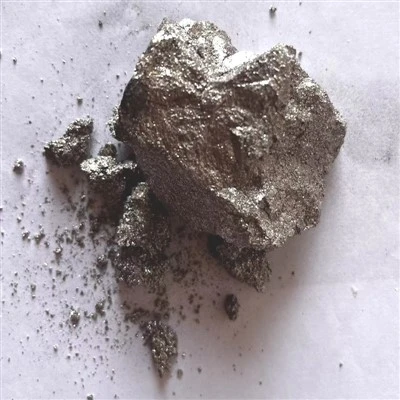
Vanadium-boron alloys have emerged as an important class of materials in various industrial applications, due to their unique properties such as high hardness, wear resistance, and improved mechanical strength. As a dedicated vanadium alloys supplier, we understand the significance of these alloys and are committed to providing high - quality products. In this blog, we will explore the production methods for vanadium - boron alloys.
1. Thermite Reduction Method
The thermite reduction method is one of the traditional and well - established ways to produce vanadium - boron alloys. This process is based on the highly exothermic reaction between a metal oxide and a reducing agent.
In the case of vanadium - boron alloy production, vanadium pentoxide (V₂O₅) and boron oxide (B₂O₃) are commonly used as raw materials. Aluminium is often selected as the reducing agent. The chemical reactions involved are as follows:
- (3V₂O₅ + 10Al→6V + 5Al₂O₃)
- (B₂O₃+ 2Al→2B + Al₂O₃)
The reaction is initiated by a small ignition source, and once it starts, it becomes self - sustaining because of the large amount of heat released. During the process, the reactants are placed in a refractory - lined container to withstand the high temperatures. After the reaction is complete, the molten vanadium - boron alloy settles at the bottom of the container, while the aluminium oxide slag floats on the top. The alloy can then be separated from the slag through tapping and subsequent refining processes.
The advantages of the thermite reduction method are its relatively simple process and the ability to produce alloys with a high degree of purity quickly. However, it also has some limitations. The reaction is very violent and difficult to control precisely, which may lead to uneven alloy composition. Also, the cost of aluminium as a reducing agent can be relatively high, which affects the overall production cost.
2. Electric Arc Furnace Method
The electric arc furnace (EAF) method is another popular approach for producing vanadium - boron alloys. This method uses an electric arc as the heat source to melt and react the raw materials.
The raw materials typically include vanadium - containing substances (such as vanadium ore concentrates or vanadium scrap), boron - containing materials (like boron carbide or boric acid), and other additives. These materials are charged into the electric arc furnace, and an electric arc is struck between the electrodes and the charge. The high - temperature arc melts the raw materials, and chemical reactions occur during the melting process to form the vanadium - boron alloy.
One of the key advantages of the EAF method is the precise control of temperature and alloy composition. The operator can adjust the power input to maintain the desired temperature, and can also add alloying elements in a controlled manner to achieve the required alloy properties. Additionally, this method can handle a wide range of raw materials, including recycled vanadium and boron sources, which is beneficial for resource recycling and cost reduction.
However, the EAF method requires a significant amount of electrical energy, which can increase production costs. Moreover, the furnace lining needs to be regularly maintained and replaced due to the high - temperature and corrosive environment inside the furnace.
3. Vacuum Induction Melting Method
The vacuum induction melting (VIM) method is a more advanced and precise way to produce high - quality vanadium - boron alloys. This method combines the principles of induction heating and vacuum technology.

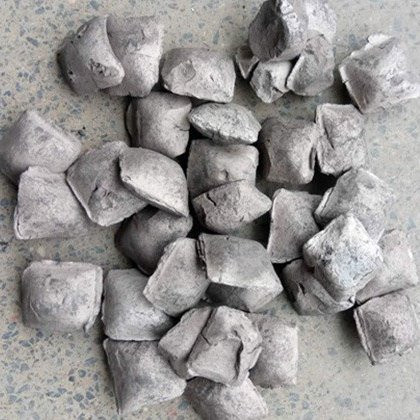
In a VIM furnace, the raw materials are placed in a crucible, and an alternating current is passed through an induction coil surrounding the crucible. The alternating magnetic field generated by the coil induces eddy currents in the raw materials, which heat and melt them. The entire process takes place in a vacuum environment, which has several important benefits.
First, the vacuum environment can effectively remove impurities such as oxygen, nitrogen, and hydrogen from the alloy. This helps to improve the alloy's purity and mechanical properties. Second, it reduces the risk of oxidation during the melting process, which is especially important for vanadium and boron, which are easily oxidized at high temperatures.
The VIM method allows for very precise control of alloy composition and microstructure. By adjusting the induction power and melting time, the melting process can be accurately regulated. However, the equipment for VIM is expensive, and the production capacity is relatively low compared to other methods. This makes the production cost relatively high, but it is highly suitable for applications where high - quality and high - precision vanadium - boron alloys are required, such as in the aerospace and high - end automotive industries.
4. Applications of Vanadium - Boron Alloys and Our Product Offerings
Vanadium - boron alloys have a wide range of applications due to their excellent properties. They are commonly used in the production of high - strength steel, where they can improve the strength, hardness, and wear resistance of the steel. In the tool - making industry, these alloys are used to manufacture cutting tools, drilling bits, and dies, as they can significantly enhance the tool's performance and service life.
As a leading vanadium alloys supplier, we offer a variety of vanadium - related products, including Vanadium Nitride, Dedaoaluminium Vanadium Alloy, Vanadium Nitrogen Alloy, 77 Vanadium - Nitrogen Alloy, and Vanadium Metal. Our vanadium - boron alloys are produced using advanced technologies and strict quality control measures to ensure high - quality and consistent performance.
5. Contact Us for Procurement and Negotiation
If you are in the market for high - quality vanadium - boron alloys or any of our other vanadium alloy products, we invite you to contact us. We have a professional sales team that can provide you with detailed product information, competitive quotes, and excellent after - sales service. Whether you are a small - scale manufacturer or a large - scale industrial enterprise, we are committed to meeting your specific requirements.
We believe that through in - depth communication and negotiation, we can establish a long - term and mutually beneficial cooperation relationship. So, don't hesitate to reach out to us for all your vanadium alloy needs.
References
- Smith, J. K., & Johnson, A. L. (2018). "Advanced Metallurgy of Vanadium Alloys." Metallurgical Press.
- Brown, R. T. (2019). "Production Technologies of Special Alloys: A Comprehensive Review." Journal of Alloy Science, 45(2), 123 - 145.
- Green, M. H. (2020). "Vacuum Melting Techniques for High - Purity Alloys." International Journal of Metallurgical Engineering, 32(4), 201 - 215.