


Ferrotitanium Alloy
Products Description
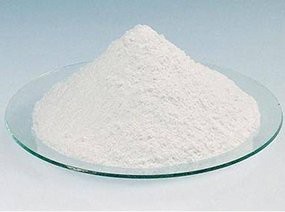
Titanium is considered a rare metal because it is dispersed in nature and difficult to extract. But its relative abundance in all elements ranked tenth, ferrotitanium alloy, is a high-strength light alloy, has a wide range of applications in all aspects, as a deoxidizer, alloy additives, in the steelmaking process of deoxidation capacity is much higher than silicon, manganese, and can reduce ingot segregation, improve the quality of the ingot, improve the yield, while increasing the strength of steel, corrosion resistance and stability; Used in stainless steel, tool steel, can improve the performance of cast iron;
intro

►The invention discloses a ferrotitanium alloy and a preparation method thereof
The composition of ferrotitanium alloy by mass percentage includes titanium powder 20%~50%, carbon powder 6%~15%, praseodymium powder 0.2%~0.6%, copper powder0.1%~0.3%, nickel powder 0.1%~0.2%, residual iron powder, total mass percentage sum is 100%; The preparation method of the ferrotitanium alloy is as follows: firstly, the raw materials are respectively weighed according to the mass percentage, then the raw materials are respectively sifted, the sifted raw materials are mixed and ground, and finally the pressing and sintering are carried out to prepare an ferrotitanium alloy; The ferrotitanium alloy of the invention has not only high density, high melting point, but also superior wear resistance, and can better meet the market demand for ferrotitanium alloy.

►Alloying elements can be divided into three categories according to their effect on the phase transition temperature:
① The elements that stabilize the α phase and increase the phase transition temperature are the α stable elements, including aluminum, carbon, oxygen and nitrogen. Among them, aluminum is the main alloying element of titanium alloy, which has obvious effect on improving the strength of alloy at room temperature and high temperature, reducing the specific gravity and increasing the elastic modulus.
② The elements that stabilize β phase and reduce the phase transition temperature are β stable elements, which can be divided into isomorphic and eutectoid types. The former has molybdenum, niobium, vanadium and so on; The latter has chromium, manganese, copper, iron, silicon and so on.
③ The elements that have little effect on the phase transition temperature are neutral elements, such as zirconium and tin.Oxygen, ammonia, carbon and hydrogen are the main impurities of titanium alloys. Oxygen and nitrogen have a large solubility in the α phase, which has a significant strengthening effect on titanium alloy, but it reduces the plasticity. It is usually stipulated that the content of oxygen and nitrogen in titanium is below 0.15~0.2% and 0.04-0.05%, respectively. The solubility of hydrogen in the a phase is very small, and too much hydrogen dissolved in titanium alloys will produce hydrides, making the alloy brittle. Generally, the hydrogen content in titanium alloys is controlled below 0.015%. The dissolution of hydrogen in titanium is reversible and can be removed by vacuum annealing.
Product Picture


Our factory

workshop

workshop

workshop

workshop
Previous
Silico-barium-zirconiumNext
degreasing agentYou Might Also Like


Send Inquiry