

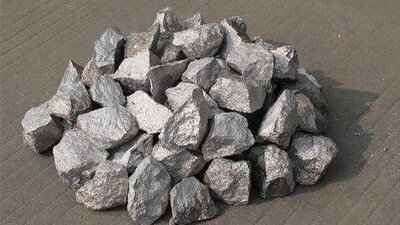
Ferro silicon alloys are a crucial category of ferroalloys widely utilized across various industries, primarily in steelmaking and foundry applications. As a dedicated supplier of ferro silicon alloys, I am well - versed in their diverse properties, with hardness being one of the most significant. In this blog, I will delve into the hardness properties of ferro silicon alloys, exploring what influences them and how they impact different applications.
Composition and Its Impact on Hardness
The hardness of ferro silicon alloys is fundamentally determined by their chemical composition. Ferro silicon alloys are mainly composed of iron (Fe) and silicon (Si), with silicon content typically ranging from 15% to 90%. The addition of silicon to iron has a profound effect on the alloy's crystal structure and, consequently, its hardness.
Silicon is a hard and brittle element. When it is dissolved in iron, it forms intermetallic compounds and solid solutions. These compounds and solutions strengthen the alloy matrix, increasing its hardness. For example, in FeSi 75 Grade, the relatively high silicon content (around 75%) results in a harder alloy compared to those with lower silicon percentages. The silicon atoms occupy interstitial positions in the iron lattice, causing lattice distortion. This distortion makes it more difficult for dislocations to move through the crystal structure, which is a key mechanism for plastic deformation. As a result, the alloy becomes more resistant to indentation and scratching, leading to higher hardness.
In addition to silicon, other elements may be present in ferro silicon alloys, which can also affect hardness. For instance, Ferro Silicon Manganese contains manganese in addition to iron and silicon. Manganese can form carbides and other compounds in the alloy, which contribute to increased hardness and wear resistance. Similarly, Ferro Silicon Magnesium has magnesium as an alloying element. Magnesium can refine the grain structure of the alloy, and a finer grain size generally corresponds to higher hardness according to the Hall - Petch relationship.
Manufacturing Process and Hardness
The manufacturing process of ferro silicon alloys also plays a significant role in determining their hardness. The most common method for producing ferro silicon alloys is through the reduction of silica (SiO₂) in an electric arc furnace. The reaction involves the use of coke as a reducing agent, and the process conditions, such as temperature, reaction time, and cooling rate, can all affect the final hardness of the alloy.
During the smelting process, the formation of different phases and compounds depends on the temperature and the ratio of reactants. A higher smelting temperature may lead to better homogenization of the alloy, but if the cooling rate is too fast after smelting, the alloy may develop internal stresses and a more brittle structure with higher hardness. On the other hand, a slower cooling rate allows for more ordered crystal growth and may result in a slightly lower but more uniform hardness.
When the alloy is cast into different shapes, the solidification process also influences hardness. For example, in large - scale casting, the cooling rate can vary from the surface to the interior of the casting. The surface may cool more rapidly, resulting in a harder outer layer, while the interior may have a relatively lower hardness due to slower cooling.
Measuring the Hardness of Ferro Silicon Alloys
There are several methods available for measuring the hardness of ferro silicon alloys, each suitable for different applications and levels of accuracy requirements.
The Brinell hardness test is one of the most commonly used methods. In this test, a hard ball of a specified diameter is pressed into the alloy surface with a known force for a certain period. The diameter of the indentation left on the surface is then measured, and the Brinell hardness number (BHN) is calculated based on the applied force and the surface area of the indentation. This method is suitable for relatively large - grained and homogeneous alloys, and it provides a good indication of the overall hardness of the material.
The Rockwell hardness test is another popular choice. There are different scales (e.g., Rockwell C, Rockwell B) available, depending on the hardness range of the material. A diamond cone or a hardened steel ball is used as the indenter, and the depth of the indentation is measured. The Rockwell hardness number is then determined based on the difference in depth before and after the application of the load. This test is quick and can be used for a wide range of hardness values, making it suitable for quality control in industrial production.
The Vickers hardness test uses a square - based pyramid indenter. A known force is applied to the indenter, and the diagonal length of the resulting indentation is measured. The Vickers hardness number (HV) is calculated from the applied force and the surface area of the indentation. This method is particularly useful for measuring the hardness of small areas or thin sections of the alloy, as well as for materials with high hardness.
Hardness in Different Applications
The hardness properties of ferro silicon alloys are of great importance in their various applications.
In the steelmaking industry, ferro silicon alloys are used as deoxidizers and alloying agents. The high hardness of these alloys can contribute to the overall strength and wear resistance of the final steel product. For example, when FeSi 75 Grade is added to steel, it not only helps to remove oxygen but also increases the hardness and toughness of the steel. This is crucial for applications such as structural steel, automotive parts, and machinery components, where the steel needs to withstand high - stress conditions and wear.
In the foundry industry, ferro silicon alloys are used to modify the properties of cast iron. The hardness of the alloy can affect the fluidity of the molten metal during casting and the final properties of the castings. For instance, by adjusting the hardness of the ferro silicon alloy added to cast iron, foundries can control the graphite morphology and the mechanical properties of the castings. Harder ferro silicon alloys can promote the formation of a more fine - grained and wear - resistant structure in the cast iron, making it suitable for applications such as engine blocks, pipes, and machine tools.
Comparison with Other Ferroalloys
When compared with other ferroalloys such as Ferromolybdenum and Ferrotitanium Alloy, ferro silicon alloys have their unique hardness characteristics.
Ferromolybdenum is known for its high - temperature strength and hardness. It is often used in high - strength steels and heat - resistant alloys. While ferro silicon alloys can also contribute to the hardness of steel, ferromolybdenum provides more significant improvements in high - temperature hardness and creep resistance.
Ferrotitanium alloys are mainly used for their ability to refine the grain structure of steel and improve its strength and toughness. Although they can also increase the hardness of the alloy to some extent, the mechanism is different from that of ferro silicon alloys. Ferrotitanium forms titanium carbides and nitrides, which act as nucleation sites for grain refinement, while ferro silicon alloys strengthen the matrix through solid - solution strengthening and the formation of intermetallic compounds.
Conclusion
In conclusion, the hardness properties of ferro silicon alloys are determined by their chemical composition, manufacturing process, and can be accurately measured using various methods. These properties play a crucial role in the performance of the alloys in different applications, especially in steelmaking and foundry industries.
As a ferro silicon alloy supplier, I understand the importance of providing products with consistent and appropriate hardness properties to meet the specific needs of our customers. Whether you are in the steelmaking, foundry, or other industries that rely on ferro silicon alloys, I am committed to offering high - quality products and professional technical support.
If you are interested in purchasing ferro silicon alloys or would like to discuss your specific requirements, please feel free to get in touch. I look forward to the opportunity to collaborate with you and help you achieve your production goals.
References
- ASM Handbook, Volume 1: Properties and Selection: Irons, Steels, and High - Performance Alloys.
- Iron and Steel Institute of Japan. "Handbook of Steelmaking."
- Pekguleryuz, M. O., & Celik, S. "Ferroalloys: Principles and Technology."


