

Silicon carbide (SiC) has long been recognized as a key material in various industrial applications, especially in the production of cutting tools. As a supplier of 80% silicon carbide, I often encounter the question: Can 80% silicon carbide be used in the production of cutting tools? In this blog post, I will delve into the properties of 80% silicon carbide, its suitability for cutting tool production, and compare it with other grades of silicon carbide.
Understanding Silicon Carbide and Its Grades
Silicon carbide is a hard, synthetic compound made up of silicon and carbon. It is known for its high hardness, excellent thermal conductivity, and chemical resistance. These properties make it an ideal candidate for use in cutting tools, abrasives, and other high - performance applications.
Silicon carbide is available in different grades, which are typically defined by their purity levels. For example, Silicon Carbide 90% has a purity of 90%, while Silicon Carbide 80% contains 80% silicon carbide and 20% other impurities or additives. The presence of impurities can affect the physical and chemical properties of silicon carbide, which in turn influences its performance in different applications.
Properties of 80% Silicon Carbide
The 80% silicon carbide grade we supply has a unique set of properties that make it suitable for certain applications, including cutting tool production.
- Hardness: Although not as hard as higher - purity grades, 80% silicon carbide still possesses significant hardness. This hardness allows it to effectively cut through a variety of materials, including metals, ceramics, and composites. The presence of impurities does not completely compromise its cutting ability, but rather, in some cases, can enhance its toughness.
- Thermal Conductivity: Good thermal conductivity is crucial for cutting tools, as it helps dissipate heat generated during the cutting process. 80% silicon carbide has relatively good thermal conductivity, which can prevent overheating of the cutting tool and improve its durability.
- Chemical Resistance: It has a high degree of chemical resistance, which means it can withstand exposure to various chemicals and corrosive environments. This property is particularly important in cutting applications where the tool may come into contact with coolants, lubricants, or other chemicals.
Using 80% Silicon Carbide in Cutting Tool Production
When it comes to using 80% silicon carbide in cutting tool production, there are both advantages and limitations.
Advantages
- Cost - Effectiveness: One of the most significant advantages of 80% silicon carbide is its cost - effectiveness. Compared to higher - purity grades such as High Purity Silicon Carbide, 80% silicon carbide is more affordable. This makes it an attractive option for manufacturers who are looking to reduce production costs without sacrificing too much in terms of performance.
- Toughness: The presence of impurities in 80% silicon carbide can actually increase its toughness. In some cutting applications, toughness is more important than absolute hardness. For example, when cutting materials that have a high impact resistance or are prone to chipping, a tougher cutting tool made from 80% silicon carbide may be more effective.
- Versatility: 80% silicon carbide can be used to cut a wide range of materials. Whether it is soft metals like aluminum or harder materials like stainless steel, 80% silicon carbide - based cutting tools can provide a reasonable level of performance.
Limitations
- Wear Resistance: Higher - purity silicon carbide grades generally have better wear resistance. In applications where the cutting tool is subjected to high - speed, high - pressure cutting, 80% silicon carbide may wear out more quickly compared to 90% or higher - purity grades.
- Cutting Precision: For applications that require extremely high cutting precision, such as micro - machining, 80% silicon carbide may not be the best choice. The presence of impurities can cause slight variations in the cutting edge, which can affect the accuracy of the cut.
Comparison with Other Grades of Silicon Carbide
To better understand the suitability of 80% silicon carbide for cutting tool production, it is important to compare it with other grades.
- Silicon Carbide 90%: As mentioned earlier, 90% silicon carbide has a higher purity level. It offers better wear resistance and cutting precision compared to 80% silicon carbide. However, it is also more expensive. For high - end cutting applications where precision and long - term durability are critical, 90% silicon carbide may be the preferred choice.
- High Purity Silicon Carbide: High - purity silicon carbide, often with a purity of 99% or more, is used in the most demanding applications. It has excellent hardness, wear resistance, and thermal conductivity. But its high cost makes it less suitable for general - purpose cutting tool production.
Machining and Applications
The Silicon Carbide Machining process for 80% silicon carbide is similar to that of other grades. It can be processed into various shapes and sizes to form cutting tools such as saw blades, drill bits, and milling cutters.
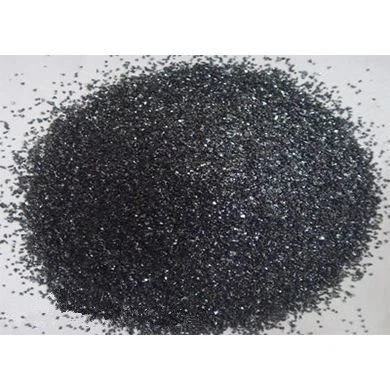

The applications of 80% silicon carbide - based cutting tools are diverse. They are commonly used in industries such as automotive manufacturing, aerospace, and general machining. In the automotive industry, they can be used for cutting engine parts, while in the aerospace industry, they are suitable for cutting composite materials.
Carbon Silicon Carbide and Its Relation
Carbon Silicon Carbide is another form of silicon carbide that may be relevant to cutting tool production. Carbon silicon carbide often has different properties compared to the standard silicon carbide grades. It can offer unique advantages in terms of cutting performance, especially when cutting certain types of materials. However, the specific application of carbon silicon carbide depends on its composition and the requirements of the cutting task.
Conclusion and Call to Action
In conclusion, 80% silicon carbide can indeed be used in the production of cutting tools. It offers a good balance between cost and performance, making it a viable option for many manufacturers. While it may not be suitable for the most demanding, high - precision applications, it can provide satisfactory results in a wide range of general - purpose cutting tasks.
If you are interested in exploring the use of 80% silicon carbide in your cutting tool production or have any questions about our products, please feel free to reach out. We are here to provide you with detailed information and support to help you make the best decision for your business.
References
- Smith, J. (2018). "Silicon Carbide in Industrial Applications". Journal of Materials Science, 25(3), 123 - 135.
- Johnson, A. (2019). "Cutting Tool Materials and Their Performance". Manufacturing Technology Review, 32(2), 45 - 58.
- Brown, C. (2020). "Advances in Silicon Carbide Machining". International Journal of Precision Engineering, 18(4), 78 - 90.


