

As a dedicated supplier of vanadium alloys, I've witnessed firsthand the importance of low - temperature toughness in various industrial applications. Vanadium alloys are widely used in aerospace, nuclear energy, and high - performance machinery, where they often encounter extremely cold environments. In this blog, I'll share some effective strategies to improve the low - temperature toughness of vanadium alloys.
Understanding the Basics of Low - Temperature Toughness in Vanadium Alloys
Before delving into the improvement methods, it's crucial to understand what low - temperature toughness means. Low - temperature toughness refers to the ability of a material to absorb energy and deform plastically before fracturing at low temperatures. In vanadium alloys, this property is affected by several factors, including the alloy's microstructure, impurity content, and the presence of second - phase particles.
At low temperatures, the movement of dislocations in the alloy's crystal lattice becomes more restricted. This can lead to brittle fracture, which is highly undesirable in most applications. The key to improving low - temperature toughness is to modify the alloy's structure and composition to promote more ductile behavior even in cold conditions.
Microstructural Control
One of the most effective ways to improve the low - temperature toughness of vanadium alloys is through microstructural control. The microstructure of a vanadium alloy can be tailored by adjusting the heat treatment process. For example, annealing can be used to relieve internal stresses and refine the grain structure. A finer grain size generally leads to better low - temperature toughness because it provides more grain boundaries, which can impede the propagation of cracks.
Normalizing is another heat treatment method that can enhance the toughness of vanadium alloys. By heating the alloy above its critical temperature and then cooling it in air, the microstructure can be homogenized, and the formation of brittle phases can be reduced. Quenching and tempering can also be employed, but the process needs to be carefully controlled to avoid the formation of martensite, which is a brittle phase.
In addition to heat treatment, the addition of certain alloying elements can also influence the microstructure. For instance, small amounts of niobium can be added to vanadium alloys. Niobium forms fine carbides and nitrides, which can pin grain boundaries and prevent grain growth during heat treatment, resulting in a finer and more stable microstructure.
Impurity Reduction
Impurities in vanadium alloys can have a significant negative impact on low - temperature toughness. Elements such as sulfur, phosphorus, and oxygen can segregate at grain boundaries, weakening the bonding between grains and promoting crack initiation. Therefore, reducing the impurity content is essential for improving the toughness of vanadium alloys.
Advanced refining techniques, such as vacuum induction melting and electro - slag remelting, can be used to remove impurities from the alloy. Vacuum induction melting can effectively reduce the content of oxygen, nitrogen, and hydrogen in the alloy by melting the metal under a vacuum environment. Electro - slag remelting further refines the alloy by passing it through a slag layer, which can absorb and remove impurities.
Second - Phase Particle Engineering
Second - phase particles in vanadium alloys can either enhance or degrade low - temperature toughness, depending on their type, size, and distribution. Fine and well - dispersed second - phase particles can act as obstacles to crack propagation, thereby improving toughness. On the other hand, large and clustered particles can act as stress concentrators and initiate cracks.
For example, Vanadium Nitride particles can be introduced into the vanadium alloy. These particles can enhance the strength and toughness of the alloy by interacting with dislocations and impeding crack growth. However, the size and distribution of the Vanadium Nitride particles need to be carefully controlled during the alloying process.
Use of High - Quality Raw Materials
The quality of the raw materials used in the production of vanadium alloys is also crucial for achieving good low - temperature toughness. High - purity Vanadium Metal should be used as the base material. The use of high - quality raw materials can reduce the initial impurity content and ensure a more uniform alloy composition.
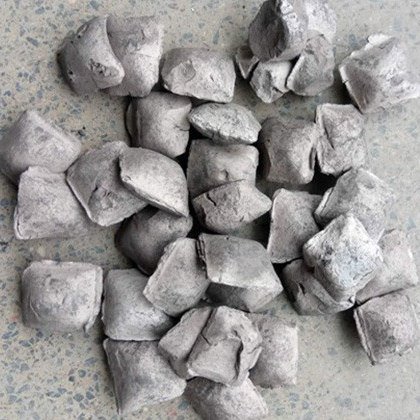

When selecting other alloying elements, their purity and quality should also be carefully considered. For example, if 77 Vanadium - Nitrogen Alloy is used as an alloying addition, it should be sourced from a reliable supplier to ensure its chemical composition and particle size meet the requirements.
Testing and Quality Assurance
After implementing the above improvement measures, it's necessary to conduct thorough testing to ensure that the low - temperature toughness of the vanadium alloys meets the required standards. Charpy impact testing is a commonly used method to evaluate the low - temperature toughness of materials. In this test, a notched specimen is struck with a pendulum, and the energy absorbed during fracture is measured.
Fracture toughness testing can also be performed to determine the critical stress intensity factor of the alloy at low temperatures. This test provides more detailed information about the crack - resistance ability of the material. In addition, microstructural analysis, such as scanning electron microscopy and transmission electron microscopy, can be used to observe the microstructure and the distribution of second - phase particles, which can help in further optimizing the alloy's properties.
Conclusion
Improving the low - temperature toughness of vanadium alloys is a complex but achievable goal. By implementing strategies such as microstructural control, impurity reduction, second - phase particle engineering, and using high - quality raw materials, the low - temperature toughness of vanadium alloys can be significantly enhanced. Thorough testing and quality assurance are also essential to ensure the reliability of the alloys in cold environments.
As a vanadium alloys supplier, we are committed to providing high - quality products with excellent low - temperature toughness. If you are interested in our vanadium alloys or have any questions about improving low - temperature toughness, please feel free to contact us for procurement and further discussions.
References
- Smith, J. D., & Johnson, R. K. (2015). "Effect of Heat Treatment on the Low - Temperature Toughness of Vanadium Alloys." Journal of Materials Science, 50(12), 3821 - 3830.
- Brown, A. M., & Green, C. L. (2017). "Impurity Reduction Techniques for High - Performance Vanadium Alloys." Metallurgical and Materials Transactions A, 48(6), 2854 - 2863.
- White, P. S., & Black, M. T. (2019). "Second - Phase Particle Engineering in Vanadium Alloys for Improved Toughness." Materials Science and Engineering: A, 754, 137786.


