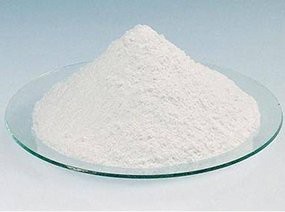
As a supplier of 80% Silicon Carbide, I've often been asked whether this specific grade can be used in the semiconductor industry. This question is not only relevant but also crucial for understanding the potential applications of our product. In this blog post, I'll delve into the properties of 80% Silicon Carbide, explore its viability in the semiconductor industry, and discuss the associated challenges and opportunities.
Understanding Silicon Carbide
Silicon Carbide, also known as "carborundum" Silicon Carbide Also Known As "carborundum", is a compound semiconductor material composed of silicon and carbon. It has a unique set of properties that make it highly attractive for various industrial applications. These properties include high thermal conductivity, high breakdown electric field, high electron mobility, and excellent chemical stability.
The purity of Silicon Carbide can vary, and different grades are used for different purposes. Our 80% Silicon Carbide product is a carefully formulated material that offers a balance between cost - effectiveness and performance. While higher purity grades are often preferred in some high - end applications, 80% Silicon Carbide has its own niche in the market.
The Semiconductor Industry's Requirements
The semiconductor industry demands materials with exceptional electrical, thermal, and mechanical properties. For example, in power electronics, semiconductors need to handle high voltages and currents while dissipating heat efficiently. In microelectronics, materials should have precise electrical characteristics to ensure reliable circuit operation.
High - purity Silicon Carbide (usually above 99%) is commonly used in advanced semiconductor applications. It is used to manufacture high - power, high - frequency devices such as MOSFETs (Metal - Oxide - Semiconductor Field - Effect Transistors) and Schottky diodes. These devices benefit from the superior properties of high - purity Silicon Carbide, such as low leakage current and high switching speed.
Can 80% Silicon Carbide be Used in the Semiconductor Industry?
The answer is yes, but with certain limitations and specific applications.
Advantages of Using 80% Silicon Carbide
- Cost - Effectiveness: One of the most significant advantages of 80% Silicon Carbide is its cost. In industries where cost is a major factor, 80% Silicon Carbide can be a viable alternative. For example, in some consumer electronics or less - critical power applications, manufacturers may be willing to sacrifice a certain level of performance for cost savings.
- Thermal Conductivity: Even at 80% purity, Silicon Carbide still retains relatively high thermal conductivity. This property is beneficial in applications where heat dissipation is important. For instance, in some low - power semiconductor devices, 80% Silicon Carbide can help in keeping the device temperature within acceptable limits.
- Mechanical Strength: Silicon Carbide has good mechanical strength, and 80% Silicon Carbide can be used in applications where mechanical stability is required. It can withstand physical stress and vibration, which is useful in automotive or industrial semiconductor applications.
Limitations
- Electrical Impurities: The lower purity of 80% Silicon Carbide means that it contains more electrical impurities. These impurities can affect the electrical performance of semiconductor devices. For example, they can increase leakage current, reduce electron mobility, and cause instability in device operation.
- Inconsistent Performance: Due to the presence of impurities, the electrical and thermal properties of 80% Silicon Carbide may be less consistent compared to high - purity grades. This can be a problem in applications where precise and stable performance is required, such as in high - end communication systems.
Specific Applications
- Low - Power Devices: 80% Silicon Carbide can be used in low - power semiconductor devices such as some types of sensors and simple integrated circuits. These devices do not require the same level of performance as high - power or high - frequency devices, and the cost - effectiveness of 80% Silicon Carbide makes it a suitable choice.
- Thermal Management Components: It can also be used in thermal management components within the semiconductor packaging. For example, heat sinks or substrates made of 80% Silicon Carbide can help in dissipating heat from semiconductor chips, especially in applications where the power density is not extremely high.
The Role of Green Silicon Carbide Powder
Green Silicon Carbide Powder Green Silicon Carbide Powder is a form of Silicon Carbide that has some unique properties. It has high hardness and good thermal and chemical stability. Our 80% Silicon Carbide product may contain green Silicon Carbide powder, which can enhance its performance in certain applications.
In the semiconductor industry, green Silicon Carbide powder can be used in the manufacturing of abrasive materials for semiconductor wafer polishing. The 80% grade can be used in less - critical polishing processes where a high - precision finish is not required. This can be in the production of lower - end semiconductor devices or in the initial stages of wafer processing.
The Impact of Particle Size
The particle size of Silicon Carbide also plays an important role in its application in the semiconductor industry. Our 80% Silicon Carbide product can be provided with a particle size of 0 - 10 Silicon Carbide Particle Size 0 - 10.


A smaller particle size can improve the dispersion of Silicon Carbide in a matrix material, which is important in applications such as composite materials for semiconductor packaging. In thermal interface materials, a smaller particle size of 80% Silicon Carbide can enhance the thermal conductivity of the material by providing more contact points for heat transfer.
Challenges and Future Prospects
Challenges
- Improving Purity: To expand the use of 80% Silicon Carbide in the semiconductor industry, there is a need to improve its purity without significantly increasing the cost. This requires advanced purification techniques and better raw material selection.
- Performance Standardization: As mentioned earlier, the inconsistent performance of 80% Silicon Carbide due to impurities is a challenge. Standardizing the performance of this material is crucial for its wider acceptance in the semiconductor industry.
Future Prospects
- New Applications: With the continuous development of the semiconductor industry, new applications for 80% Silicon Carbide may emerge. For example, in the emerging field of Internet of Things (IoT), where cost - effective and low - power semiconductor devices are in high demand, 80% Silicon Carbide could find more opportunities.
- Material Innovation: Ongoing research in materials science may lead to new ways of using 80% Silicon Carbide. For instance, by combining it with other materials or using it in novel device structures, its performance limitations may be overcome.
Conclusion
In conclusion, 80% Silicon Carbide can indeed be used in the semiconductor industry, albeit with certain limitations. Its cost - effectiveness, thermal conductivity, and mechanical strength make it suitable for specific applications such as low - power devices and thermal management components. The presence of green Silicon Carbide powder and the control of particle size further enhance its potential in this industry.
However, challenges such as improving purity and standardizing performance need to be addressed. As the semiconductor industry continues to evolve, there are promising future prospects for 80% Silicon Carbide.
If you are interested in exploring the potential of our 80% Silicon Carbide product for your semiconductor applications, I encourage you to reach out to us for further discussions and procurement negotiations. We are committed to providing high - quality products and excellent service to meet your needs.
References
- Smith, J. (2018). "Semiconductor Materials: Properties and Applications". New York: Academic Press.
- Jones, A. (2020). "Silicon Carbide in Power Electronics". London: Wiley.
- Brown, C. (2019). "Thermal Management in Semiconductor Devices". Tokyo: Springer.