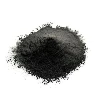
From the rebar in buildings to the steel panels in cars and stainless steel pots in the kitchen-manganese iron plays a role in nearly every steel product.
Preventing Bubbles from Forming in Molten Steel
During the smelting process, a significant amount of oxygen can inadvertently dissolve into the molten steel. If this oxygen remains in the steel, it will form small bubbles as the steel solidifies-much like the bubbles found inside a block of ice. These bubbles make the steel brittle and prone to breaking.
The primary role of ferromanganese is to "capture" the oxygen from the molten steel. Manganese has a particular "affinity" for oxygen; as soon as they come into contact, they combine to form a very light slag that floats to the surface of the molten steel, where it is skimmed off. This removes excess oxygen from the molten steel, resulting in solid, dense steel ingots.
Making Steel Both Hard and Tough
Pure iron is actually quite soft and cannot be used directly as a structural material. Adding a small amount of manganese to molten iron significantly increases the strength and hardness of the steel without making it brittle.
Many construction-grade rebar, bridge girders, and automotive crash beams contain an appropriate amount of manganese. Much like the reinforcing bars in concrete (though the analogy is a bit of a stretch), it allows steel to withstand greater forces without sacrificing toughness.
Preventing Steel from Spontaneously Cracking at High Temperatures
This is a crucial function of ferromanganese that many people are unaware of.
Sulfur is a naturally occurring "troublemaker" in steel. When steel is heated to temperatures exceeding 1,000 degrees Celsius for rolling or forging, sulfur causes trouble-it causes the steel's grains to "separate," leading the steel to crack under pressure. This phenomenon is known as "hot shortness."
Ferro-manganese steps in to "bond" with sulfur, forming a highly heat-resistant compound called manganese sulfide. This compound remains securely within the grain interior without disrupting the grain boundaries. As a result, the destructive effects of sulfur are completely neutralized.
Why Are Different Types of Ferro-Manganese Used for Different Steel Grades?
Ferro-manganese is classified into three types based on carbon content:
- Standard reinforcing bars and general construction steel: High-carbon ferro-manganese is sufficient; it is inexpensive and meets the requirements.
- Mechanical parts requiring toughness and strength (e.g., gears, shafts): Use medium-carbon ferromanganese.
- Stainless steel and high-grade alloy steel (e.g., kitchenware, medical devices): Low-carbon ferromanganese must be used, as excessive carbon can be detrimental.
Ferro-manganese may seem unremarkable in steelmaking, but it performs three critical functions: deoxidation, strengthening, and desulfurization. Without it, steelmaking costs would skyrocket and steel quality would plummet.