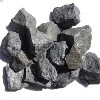
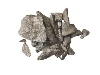
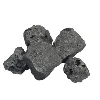
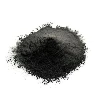
What is silicon manganese?
Silicon manganese is a ternary alloy composed of silicon, manganese, and iron, typically containing 10–30% silicon, 60–70% manganese, and a small amount of carbon. It appears as grayish-black blocks or granules, with a melting point of approximately 1200–1300°C and a density of 6.3–7.1 g/cm³. Silicon manganese is chemically active and readily reacts with elements such as oxygen and sulfur. Therefore, it serves two primary functions in the steelmaking process:
1. As a deoxidizer, it prioritizes reacting with oxygen in molten steel to form silicates, thereby enhancing the purity of the steel.
2. As an alloying additive, it improves the hardness, wear resistance, and corrosion resistance of the steel.
Why is silicon manganese added during steelmaking?
Efficient deoxidation
Both silicon and manganese have a strong affinity for oxygen. When silicon manganese is added, silicon reacts preferentially with oxygen in the molten steel to form SiO₂, while manganese reacts with the remaining oxygen to form MnO. Together, they form low-melting-point silicate inclusions. These inclusions float to the surface and are easily removed. As a result, the oxygen content in the steel is reduced, and porosity and cracks are minimized. This deoxidation method is highly efficient.
Auxiliary desulfurization
Manganese has a strong affinity for sulfur and can react with sulfur in steel to form MnS. MnS exists in steel as fine particles, preventing the formation of low-melting-point iron sulfide (FeS). FeS forms low-melting-point eutectic compounds with iron, leading to hot brittleness in steel. Therefore, silicon-manganese reduces hot brittleness in steel and improves its high-temperature processing performance.
Adjusting Steel Properties
Silicon enhances steel's strength, hardness, wear resistance, and magnetic permeability. Manganese improves steel's hardenability, strength, toughness, and wear resistance, making it suitable for structural steel, spring steel, and wear-resistant steel. Silicon-manganese, as a combined source of silicon and manganese, simultaneously introduces both elements into steel, simplifying the alloying process and reducing production costs.
What is the addition rate of silicon manganese during steelmaking?
There is no fixed standard for the addition rate of silicon manganese. This must be determined comprehensively based on factors such as steel grade requirements, steelmaking process, and initial composition of the molten steel.
- Meeting composition design requirements: Calculate the addition rate based on the minimum requirements for silicon and manganese specified for the steel grade. For example, the manganese content in ordinary carbon structural steel is typically 0.3%–1.0%, and silicon content is 0.1% to 0.4%. Silicon manganese is used to supplement the deficient components in the molten steel.
- Deoxidation requirements: This is determined based on the oxygen content in the molten steel, with the addition amount typically ranging from 3 to 15 kg per ton of steel. For example: Low-carbon steel and low-alloy steel have lower deoxidation requirements, with addition amounts possibly ranging from 3 to 8 kg/t. High-carbon steel or steel grades with high purity requirements may require an addition of 8–15 kg/t.
- Industry experience and process optimization: In actual production, adjustments must be made through testing or based on furnace batch data to ensure that the steel melt composition meets standards while minimizing costs.
If you have any further questions or would like more product information, please contact us. Our professional team will address each of your inquiries individually.