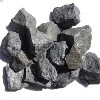
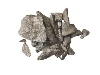
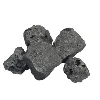
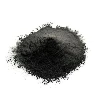
Ferroboron is a critical ferroalloy widely used in steelmaking, casting and welding industries, serving as an additive to introduce boron into molten metal. Based on carbon content, it is mainly divided into low carbon ferroboron and medium carbon ferroboron. The carbon grade directly affects product purity, application scenarios and pricing. Below is a clear comparison of their core distinctions, brought to you by Dedao.
Carbon & Main Chemical Composition
Low Carbon Ferroboron
Carbon content: typically ≤0.10%
Boron range: 18–20%
Lower impurity levels of silicon, sulfur and phosphorus
Strict control of carbon to avoid carbide precipitation
Medium Carbon Ferroboron
Carbon content: generally 0.5–1.0%
Boron range: 17–19%
Accepts slightly higher silicon and trace impurities
Production cost is lower than low carbon grade
Key note: The carbon limit is the fundamental dividing line. Higher carbon will form boron carbides, which reduce the effective boron yield in molten steel.
Performance Characteristics
Low carbon ferroboron delivers higher effective boron recovery. Boron can dissolve uniformly in the metal matrix without forming hard brittle carbide inclusions. It brings stable hardenability, fine grain effect and improves toughness.
Medium carbon ferroboron has a relatively lower boron recovery rate. The existing carbon element easily combines with boron to generate boron carbide particles. These hard particles may cause brittleness if used in high-toughness steel grades. Its advantage lies in better melting economy for general purposes.
Typical Application Fields
Low Carbon Ferroboron
Advanced high-strength low-alloy steel (HSLA), boron steel for automotive parts
High-grade alloy castings, precision investment casting
Amorphous alloy, magnetic materials, welding electrode raw materials
Products requiring high toughness, uniform grain and strict carbon control
Medium Carbon Ferroboron
Ordinary structural steel, common boron-alloyed reinforcing steel
General cast iron modification, wear-resistant castings with less strict carbon requirement
Standard welding flux and common alloy additive
Mass production projects sensitive to raw material cost
Production & Commercial Factors
Low carbon ferroboron adopts refined smelting processes, with stricter raw material selection and longer refining cycles. Its market price is noticeably higher. Dedao supplies low carbon ferroboron for high-end metallurgy projects with rigid impurity specifications.
Medium carbon ferroboron is produced by conventional reduction smelting. It has stable supply and competitive unit price. It is the preferred option for bulk alloying where carbon is not a critical restriction index. Dedao maintains steady stock of medium carbon ferroboron for bulk export orders.