


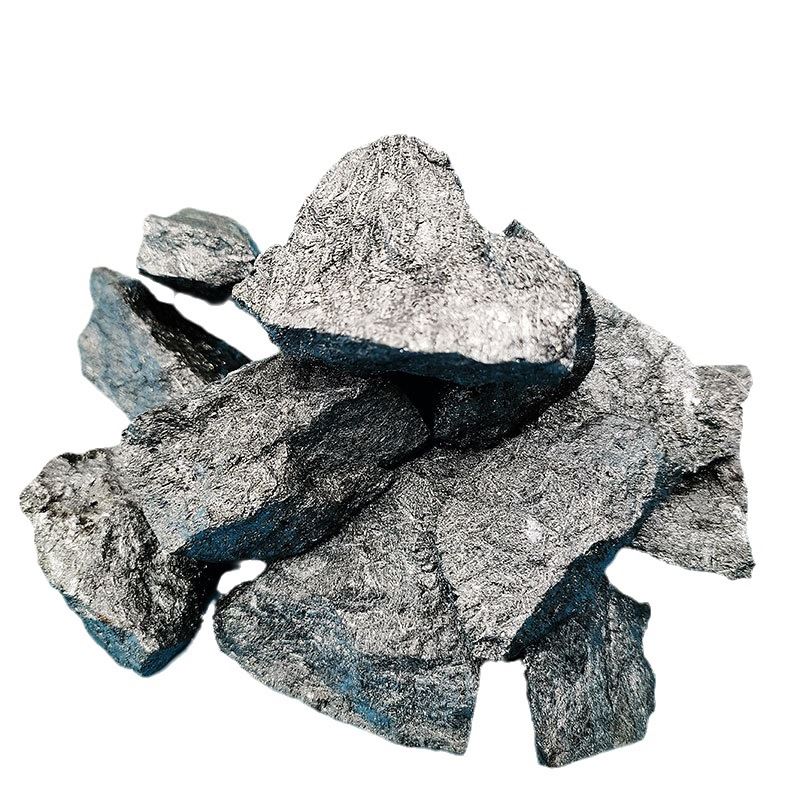
High Purity Ferrosilicon
Products Description
High purity ferrosilicon is a ferrosilicon alloy with a silicon content of more than 99%. High-purity ferrosilicon is a kind of alloy with the highest silicon content in ferrosilicon, which has certain special uses and special production processes. Its main indexes include silicon content, carbon content, aluminium content, iron content and impurity content. Among them, silicon content is one of the most important indicators, the higher the silicon content, the better the quality and performance of the alloy. The silicon content of this product is usually between 99%-99.9%. If you need ferrosilicon products, please contact us, we can recommend suitable products according to your actual needs.
Our Factory


Main components and effects
Silicon content
The level of silicon content has a significant effect on the properties of ferrosilicon alloys. The higher the silicon content, the lower the melting point of the alloy, the lower the coefficient of thermal expansion and the better the thermal ductility. In addition, high-purity ferrosilicon has good electrical conductivity, which can improve the thermal conductivity and electrical conductivity of steel.
Carbon Content
Carbon is another major element in ferrosilicon alloys, which has a significant impact on the physical and chemical properties of ferrosilicon alloys. This is usually a low carbon alloy, with a carbon content generally between 0.02% and 0.05%. Low carbon ferrosilicon significantly improves the plasticity and weldability of ferrosilicon alloys while reducing defects such as hot cracks and porosity in the alloy.
Aluminium content
Aluminium is a common impurity element in ferrosilicon alloys and can adversely affect the properties of ferrosilicon alloys. The aluminium content in high purity ferrosilicon is generally less than 0.07% to ensure the quality and performance of the alloy.
Impurity content
The content of impurity elements is easily affected by the external environment, so it needs to be strictly controlled and monitored. Common impurity elements include copper, nickel, manganese, etc., which have different degrees of influence on the quality and performance of the alloy.
Certificates


Previous
Ferrosilicon GranulesNext
FeSi PowderYou Might Also Like


Send Inquiry