

Ferro silicon, an alloy composed primarily of iron and silicon, is a crucial material in various industries, including steelmaking, foundry, and chemical manufacturing. As a ferro silicon supplier, I have witnessed firsthand the diverse applications and chemical reactions of this alloy in different environments. In this blog post, I will delve into the chemical reactions of ferro silicon under various conditions, shedding light on its behavior and significance in industrial processes.
Chemical Composition and Properties of Ferro Silicon
Before exploring the chemical reactions, it is essential to understand the composition and properties of ferro silicon. Ferro silicon typically contains between 15% and 90% silicon, with the remainder being iron and trace amounts of other elements such as calcium, aluminum, and carbon. The silicon content significantly influences the alloy's properties, including its melting point, density, and reactivity.
Ferro silicon has a high melting point, ranging from 1200°C to 1350°C, depending on the silicon content. This property makes it suitable for use in high-temperature applications, such as steelmaking and foundry processes. Additionally, ferro silicon is relatively dense, with a specific gravity ranging from 3.5 to 4.7 g/cm³. Its density increases with increasing silicon content.
Chemical Reactions in Steelmaking
One of the primary applications of ferro silicon is in steelmaking. In the steelmaking process, ferro silicon is used as a deoxidizer and alloying agent. When added to molten steel, ferro silicon reacts with oxygen to form silicon dioxide (SiO₂), which is then removed as slag. This reaction helps to reduce the oxygen content in the steel, improving its quality and mechanical properties.
The chemical reaction between ferro silicon and oxygen can be represented by the following equation:
2FeSi + 3O₂ → 2SiO₂ + 2FeO
In addition to deoxidation, ferro silicon also acts as an alloying agent in steel. Silicon enhances the strength, hardness, and corrosion resistance of steel. It also improves the steel's magnetic properties, making it suitable for use in electrical applications.
Chemical Reactions in Foundry
In the foundry industry, ferro silicon is used as an inoculant and alloying agent. When added to molten iron or steel, ferro silicon promotes the formation of graphite in cast iron, improving its mechanical properties. The silicon in ferro silicon reacts with carbon in the molten metal to form silicon carbide (SiC), which acts as a nucleation site for graphite growth.
The chemical reaction between ferro silicon and carbon can be represented by the following equation:
FeSi + C → SiC + Fe
In addition to inoculation, ferro silicon is also used as an alloying agent in cast iron and steel. Silicon enhances the strength, hardness, and wear resistance of cast iron. It also improves the fluidity of the molten metal, making it easier to cast complex shapes.
Chemical Reactions in Chemical Manufacturing
Ferro silicon is also used in chemical manufacturing processes. In the production of silicon metal, ferro silicon is used as a reducing agent. When heated with silica (SiO₂) in an electric arc furnace, ferro silicon reacts with silica to form silicon metal and iron silicate slag.
The chemical reaction between ferro silicon and silica can be represented by the following equation:
2FeSi + SiO₂ → 3Si + 2FeO

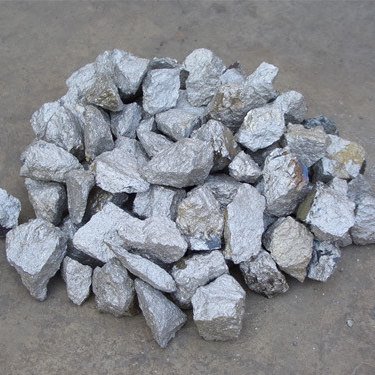
In addition to silicon metal production, ferro silicon is also used in the production of other silicon-based chemicals, such as silicon carbide, silicon nitride, and silicon tetrachloride. These chemicals have a wide range of applications in the electronics, ceramics, and chemical industries.
Chemical Reactions in Different Environments
The chemical reactions of ferro silicon can vary depending on the environment in which it is used. In an oxidizing environment, such as in the presence of oxygen or air, ferro silicon will react with oxygen to form silicon dioxide. This reaction is exothermic, releasing heat.
In a reducing environment, such as in the presence of carbon or hydrogen, ferro silicon will react with the reducing agent to form silicon and iron. This reaction is endothermic, absorbing heat.
In an acidic environment, such as in the presence of hydrochloric acid or sulfuric acid, ferro silicon will react with the acid to form silicon tetrachloride or silicon sulfate, respectively. These reactions are exothermic and can be dangerous if not properly controlled.
In a basic environment, such as in the presence of sodium hydroxide or potassium hydroxide, ferro silicon will react with the base to form sodium silicate or potassium silicate, respectively. These reactions are also exothermic and can be dangerous if not properly controlled.
Conclusion
In conclusion, ferro silicon is a versatile alloy with a wide range of applications in various industries. Its chemical reactions in different environments play a crucial role in its performance and effectiveness. As a ferro silicon supplier, I understand the importance of providing high-quality products that meet the specific needs of our customers. Whether you are in the steelmaking, foundry, or chemical manufacturing industry, we can provide you with the right ferro silicon product for your application.
If you are interested in learning more about our ferro silicon products or would like to discuss your specific requirements, please feel free to [contact us for procurement and negotiation]. We look forward to working with you to meet your ferro silicon needs.


