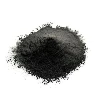
Many buyers across global markets often get confused over two terms: carborundum and silicon carbide. A large number of industrial traders still treat them as two separate materials, which may cause misunderstandings during inquiry, quotation and order confirmation.
Simply put, carborundum is the common, long‑standing industrial name, while silicon carbide (chemical formula SiC) is the formal technical name for this silicon‑carbon compound. The name "Carborundum" was created by its inventor Edward Acheson back in 1891, when he first synthesized the material inside an Acheson electric furnace at temperatures above 2000℃, using quartz sand and petroleum coke as raw materials.
Even today, "carborundum" remains widely used in Southeast Asia, Middle‑East, African and some South‑Asian markets when referring to abrasive‑grade SiC grit and powder. In formal technical documents, inspection reports and high‑end advanced‑ceramic or semiconductor businesses, silicon carbide is the standard name you should adopt.
Not all silicon‑carbide products are the same. Two mainstream commercial grades dominate the traditional raw‑material market: black silicon carbide and green silicon carbide.
Black silicon carbide features good toughness, medium‑high purity and sharp crystal edges. It is the cost‑effective choice for general‑purpose grinding, sandblasting, refractory aggregates and metallurgical deoxidation. Green silicon carbide carries higher SiC purity, sharper cutting performance, and suits precision grinding on hard‑to‑machine materials such as tungsten carbide, optical glass and advanced ceramics.
When purchasing raw SiC materials, do not judge quality only by names. You should always confirm key indicators: SiC content, free‑carbon impurity, particle‑size distribution, bulk density and hardness index. Different batches and production formulas will deliver different performance, even if products are called "carborundum" or "silicon carbide grit".
Over recent decades, silicon carbide has expanded far beyond simple abrasive applications. Apart from grit, fine powder, lump and granule products for grinding and refractory industries, sintered silicon‑carbide ceramic parts, reaction‑bonded SiC wear components and semiconductor‑grade SiC wafers have become fast‑growing product lines. Though they belong to the big SiC family, their production technology, purity requirements and price range are completely different from bulk carborundum abrasive raw‑materials.