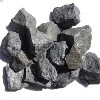
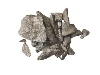
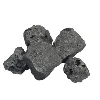
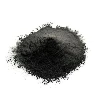
Ferroboron is a common alloy additive for steelmaking and casting. It mainly adds boron into molten steel to improve hardenability. Using ferroboron properly can cut down the use of expensive alloy materials like chromium, molybdenum and nickel.
For buyers, chemical makeup is not just a line on the spec sheet. If the composition jumps around batch after batch, boron recovery will be unstable. This causes inconsistent steel performance and even scrapped melts. Many steel mill issues come from uncontrolled impurities, not mistakes in melting work.
What matters most: boron content
Ferroboron is an alloy of iron and boron. Boron is the active ingredient, and iron makes up the rest. Most commercial products have boron between 9% and 23%. The most popular grade used by steel plants runs 17% to 21% boron.
Grades are usually named by boron and carbon levels, such as FeB20C0.05, FeB20C0.5 and FeB18C0.5 following GB/T 5682-2015.
- Low-carbon type (C ≤0.05%): fits clean high-grade steel, bearing steel and automotive boron steel.
- Medium-carbon type (C ≤0.5%): used for regular quenched steel, good for bulk orders with tighter budgets.
Do not only look at the advertised boron number. Small fluctuations add up. If boron varies more than 0.5% between shipments, your feeding calculation will be off and steel hardness will not stay steady. Always ask for test reports for each heat, not just a general range.
Impurities you need to watch closely
Every extra element changes how ferroboron works in molten steel. Buyers should set clear upper limits based on their own steel products.
- Carbon (C): The main factor separating grades. Too much carbon makes steel brittle. Low-carbon boron steel for auto parts must use low-carbon ferroboron.
- Silicon (Si): A mild deoxidizer. A little silicon helps boron stay in the steel. Too much silicon leaves unwanted residuals and hurts welding or coating quality. Most buyers cap Si below 2.5% to 3.0%.
- Aluminum (Al): Protects boron from burning off during adding. A small amount works well. Too much aluminum forms hard inclusions and can block the nozzle in continuous casting lines. High-cleanliness steel needs low-aluminum ferroboron.
- Sulfur (S) and Phosphorus (P): Both are bad impurities. Sulfur causes hot cracks, phosphorus leads to cold brittleness. High-end steel usually requires S ≤0.01% and P ≤0.05%.
- Titanium (Ti): Some ferroboron has titanium added on purpose. Titanium locks up nitrogen and stops boron from becoming useless BN. If you already add titanium separately in your furnace, do not buy Ti-bearing ferroboron, or you will over-alloy your steel.
Standards and grade selection
ISO 10386 and GB/T 5682 are the two widely used standards in global trade. These two standards have different limits for impurities. This often leads to gaps between supplier test reports and your acceptance rules.
| Grade | Boron range | Max Carbon | Typical application |
|---|---|---|---|
| FeB20C0.05 | 19.0–21.0% | 0.05% | Clean steel, auto boron steel, thin slab casting |
| FeB20C0.5 | 19.0–21.0% | 0.50% | Regular alloy steel, machinery parts |
| FeB18C0.5 | 17.0–19.0% | 0.50% | Medium strength quenched steel, cost-effective bulk use |
| FeB12C1.0 | 9.0–13.0% | 1.00% | Foundry, low-grade cast iron |
Never pick grades only based on price. Cheaper medium-carbon ferroboron cannot replace low-carbon grades for high-end steel, even if the boron percentage looks similar.
Composition works together with particle size
Lab test results alone do not tell the whole story. Lump, granule, powder and cored wire dissolve differently and have different boron recovery rates. Fine powder oxidizes easily and floats away, so less boron goes into the steel. Oversized lumps melt slowly and cause uneven boron distribution.
Many buyers ignore this point. Two batches with the same chemical report can give totally different results if particle size and surface oxidation are out of control. Add particle size, moisture and no visible slag into your purchase terms, together with chemical limits.
Quick checklist before you place orders
- Confirm which standard applies (ISO or GB/T), and write down all element limits in the contract, not only boron.
- Ask for one COA for each heat, with real tested values instead of broad ranges.
- Keep the right to sample and test goods yourself after arrival.
- Match carbon, aluminum and titanium limits to your steel grade and deoxidation process.
- Agree on acceptable boron deviation, and set terms for out-of-spec goods.
- Check surface condition, slag and moisture, especially for sea shipments.
Boron works well in very small amounts, but it is easy to lose during melting. The real value of ferroboron lies in stable usable boron, not just a high boron number on paper. For steel mills and foundries, clear chemical requirements help you avoid unstable mechanical properties, rejected heats and hidden production losses.