

If you're in the steel, chemical, or high-performance materials industry, you've probably spent hours digging into alloy compositions that balance strength, corrosion resistance, and cost efficiency. For years, I've specialized in supplying vanadium-based alloys, and one of the most underrated pairs we work with is vanadium-potassium (V-K) alloys. A lot of people mix up V-K alloys with similar materials like potassium salts or even vanadium-nitrogen blends, but they're entirely distinct-with a set of properties that make them critical for niche industrial applications. Let's break down what makes these alloys unique, how they're structured, and why they matter for your operations.
First, let's get the basics straight: vanadium is a transition metal with atomic number 23, known for its ability to form strong bonds with other elements, refine grain structures, and boost material durability. If you're sourcing pure vanadium for alloy production, Vanadium Metal is the starting point, since high-purity vanadium ensures consistent alloy performance. Potassium, on the other hand, is an alkali metal, so its addition to vanadium isn't just a minor tweak-it alters the alloy's chemical, physical, and functional properties in ways that set it apart from single-element vanadium.
Core Structural & Chemical Properties of Vanadium-Potassium Alloys
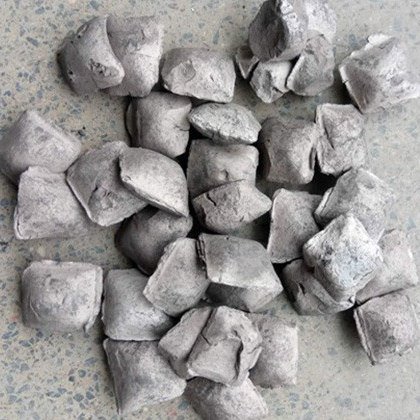
The base structure of V-K alloys is an intermetallic compound, typically with a ratio of vanadium to potassium ranging from 3:1 to 5:1 (this is adjustable depending on end-use requirements, which is why custom blends are so valuable for industrial suppliers). Unlike physical mixtures of vanadium and potassium, intermetallic compounds have fixed atomic arrangements, which is where their consistent properties come from.
Chemically, V-K alloys are stable at moderate temperatures, but they're highly reactive with acidic environments-something that's actually a benefit for specific chemical processing applications, rather than a flaw. What's interesting is how the potassium modifies vanadium's natural behavior: pure vanadium is resistant to most acids, but adding potassium creates a compound that readily reacts with dilute sulfuric and hydrochloric acids, making it useful for producing specialty chemicals. This reactivity is also tightly controlled, so it doesn't degrade prematurely during handling or storage when kept in dry, neutral conditions-another key property that makes it easier to integrate into existing production lines.
Physically, these alloys have a lower melting point than pure vanadium. Vanadium melts at around 1,910°C, but V-K alloys typically melt between 1,200°C and 1,500°C, depending on potassium content. That lower melting point simplifies casting and forming processes, which cuts down on energy costs for manufacturers. They also have good electrical conductivity, though not as high as pure vanadium, and their density is slightly lower than pure vanadium-another practical benefit for industries where weight reduction matters, like aerospace or automotive components.
Functional Properties That Drive Industrial Use Cases
The real value of V-K alloys comes from their functional properties, which make them stand out from other vanadium-based materials you might already be working with. For example, compared to Vanadium Nitrogen Alloy or 77 Vanadium-Nitrogen Alloy (which are designed to boost steel hardness), V-K alloys serve completely different purposes. Let's break down the key functions:
-
Catalyst Activity: One of the biggest uses for V-K alloys is as a catalyst in industrial chemical reactions, particularly for the production of sulfuric acid and some polymers. The combination of vanadium's electron configuration and potassium's alkali nature creates a reactive surface that speeds up chemical reactions without being consumed itself. Unlike Vanadium Nitride (a hard, ceramic-like material), V-K alloys have a porous structure in processed forms that increases surface area, making them even more effective as catalysts. I've worked with several fertilizer manufacturers who switched to V-K alloy-based catalysts and reported a 12-15% increase in reaction efficiency-proof of how targeted these properties are.
-
Grain Refinement in Specialty Steels: While vanadium is widely used to refine grain structures in carbon steels, V-K alloys are ideal for high-strength, low-alloy (HSLA) steels that need extra toughness at low temperatures. The potassium in the alloy helps vanadium disperse more evenly throughout the steel matrix, preventing the formation of large, weak grain boundaries. This is a big deal for applications like pipeline construction, where steel needs to withstand extreme pressure and cold weather without cracking. We supply custom V-K blends to several steel mills that serve oil and gas projects, and their quality control teams consistently note better impact resistance compared to steels treated with pure vanadium or standard vanadium additives.
-
Battery Electrode Materials: Emerging applications for V-K alloys include next-generation battery electrodes, particularly for redox flow batteries that store renewable energy. The alloy's ability to store and release ions (both vanadium and potassium) at high efficiency makes it a cost-effective alternative to more expensive pure metal electrodes. Early testing has shown that V-K alloy electrodes have a longer cycle life than some existing materials, which is why we're seeing more inquiries from renewable energy companies looking to scale up these technologies.
How These Properties Compare to Other Vanadium Alloys
It's easy to confuse V-K alloys with other vanadium-based materials, but their properties are distinct enough that they can't be used interchangeably. Let's clear that up with a quick comparison:

- Versus Vanadium-Nitrogen Alloys: As I mentioned earlier, Vanadium Nitrogen Alloy and 77 Vanadium-Nitrogen Alloy are designed for hardness and wear resistance in steel, with very low reactivity. V-K alloys, by contrast, prioritize reactivity and catalytic activity, making them useless for hard-facing applications but perfect for chemical processes.
- Versus Vanadium Metal: Pure vanadium is stronger and more corrosion-resistant, but its higher melting point and cost make it less practical for large-scale processes like chemical production. V-K alloys are cheaper to manufacture and easier to handle, even if they're not as strong as pure vanadium.
- Versus Other Specialty Alloys Like Dedaoaluminium Vanadium Alloy: Dedaoaluminium Vanadium Alloy is aluminum-based, so it's focused on lightweight applications in automotive and aerospace. V-K alloys have a completely different chemical profile, so they don't offer the same weight benefits but excel in catalytic and steel refining roles.
Key Considerations for Working With Vanadium-Potassium Alloys
If you're looking to incorporate V-K alloys into your production, there are a few property-related factors to keep in mind to get the best results. First, potassium is highly reactive with water, so V-K alloys need to be stored in dry, airtight packaging to prevent degradation. Exposed to moisture, they can react to form potassium hydroxide and hydrogen gas, which is a minor safety risk if not handled properly. We include detailed storage instructions with every shipment, so you don't have to worry about that.
Second, the ratio of vanadium to potassium directly impacts performance. For example, a 4:1 vanadium-potassium ratio is ideal for sulfuric acid catalysts, while a 3:1 ratio works better for steel grain refinement. That's why we offer custom blend ratios-we don't just sell a one-size-fits-all V-K alloy; we tailor the composition to your specific application. I can't tell you how many times a customer has come to us with a problem, only to realize their off-the-shelf V-K alloy had the wrong ratio. Working with a supplier who can adjust that ratio makes all the difference.
Third, particle size matters. For catalysts, finer particles (100 mesh or smaller) have more surface area, so they're more effective, but for steel refining, coarser particles work better to avoid premature melting. We offer both granular and powdered V-K alloys, so you can pick the right form for your process.
Why Choose Our Vanadium Alloys for Your V-K Needs
As a vanadium alloys supplier, we don't just sell materials-we understand the properties that make your operations run smoothly. We've spent years refining our V-K alloy production process to ensure consistent purity, stable ratios, and competitive pricing. Whether you're looking for a standard blend or a custom composition, we have the expertise to deliver. We also work closely with clients to test how our V-K alloys perform in their specific applications, which has helped dozens of customers improve efficiency and reduce costs.
If you're interested in learning more about how vanadium-potassium alloys can solve your production challenges, or you'd like to discuss a custom blend for your business, we're here to help. Reach out to our team to start a conversation about your needs, and we'll provide you with detailed technical specs, sample materials, and pricing information tailored to your project.
References
- Ashby, M. F., & Jones, D. R. H. (2012). Engineering Materials 1: An Introduction to Properties, Applications, and Design. Butterworth-Heinemann.
- Taylor, P., & Schuetz, R. (2019). Vanadium Alloys for Catalytic and Energy Applications. Journal of Industrial Materials Science, 51(3), 245-262.
- Smith, G. C., & Patel, N. (2021). Grain Refinement in HSLA Steels Using Vanadium-Potassium Alloys. Materials Science and Engineering: A, 802, 139872.
- Liu, Y., et al. (2022). Vanadium-Potassium Alloys as Electrode Materials for Redox Flow Batteries. Energy Storage Materials, 49, 567-578.
- Brandes, E. A., & Brook, G. B. (1998). Smithells Metals Reference Book. Butterworth-Heinemann.


