

Hey there! As a supplier of 90% Silicon Carbide, I often get asked about the differences between 90% Silicon Carbide and plasma - sprayed silicon carbide. So, I thought I'd break it down in this blog post to help you understand what makes each of them unique.
What is 90% Silicon Carbide?
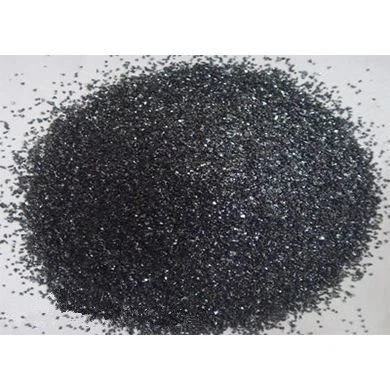
Let's start with 90% Silicon Carbide. As the name suggests, it's a form of silicon carbide where 90% of the material is pure silicon carbide. The remaining 10% usually consists of other elements or impurities. This type of silicon carbide is widely used in various industries because of its excellent properties.
One of the key features of 90% Silicon Carbide is its high hardness. It's almost as hard as diamond, which makes it great for applications where wear resistance is crucial. For example, it's commonly used in abrasives, cutting tools, and grinding wheels. The high hardness allows these tools to cut through tough materials with ease and maintain their sharpness for a long time.
Another advantage of 90% Silicon Carbide is its high thermal conductivity. This means it can transfer heat quickly and efficiently. In industries like electronics and automotive, this property is highly valued. In electronic devices, it can help dissipate heat generated by components, preventing overheating and improving the overall performance and lifespan of the device. In the automotive industry, it can be used in brake pads and other parts that need to withstand high temperatures.
You can also check out Silicon Carbide 80% if you're interested in different purity levels of silicon carbide.
What is Plasma - Sprayed Silicon Carbide?
Now, let's talk about plasma - sprayed silicon carbide. Plasma spraying is a process where silicon carbide powder is heated to a very high temperature using a plasma torch and then sprayed onto a surface. This creates a coating of silicon carbide on the substrate.
The main advantage of plasma - sprayed silicon carbide is its ability to create a thin, uniform coating on complex shapes. This is because the plasma spraying process can reach all areas of the substrate, even those with irregular geometries. For example, in aerospace applications, it can be used to coat turbine blades. The coating provides protection against wear, corrosion, and high - temperature oxidation, which helps to extend the lifespan of the blades.
Plasma - sprayed silicon carbide coatings also have excellent adhesion to the substrate. This means that the coating won't easily peel off or delaminate, even under harsh operating conditions. This is crucial in applications where the coating needs to remain intact to provide long - term protection.
However, the process of plasma spraying is more complex and expensive compared to using 90% Silicon Carbide in bulk form. It requires specialized equipment and trained operators. Also, the thickness of the coating is limited, and it may not be suitable for applications that require a large amount of silicon carbide material.
Key Differences
Composition and Purity
The most obvious difference is in the composition. 90% Silicon Carbide is a bulk material with a specific purity level. It comes in various forms like powders, granules, or solid blocks. On the other hand, plasma - sprayed silicon carbide is a coating, and its purity can vary depending on the starting powder used in the spraying process.
Manufacturing Process
The manufacturing process of 90% Silicon Carbide involves traditional methods like the Acheson process, where silicon dioxide and carbon are heated at high temperatures to produce silicon carbide. Plasma - sprayed silicon carbide, as mentioned earlier, requires a plasma spraying system. The difference in manufacturing processes also affects the cost and production time. Producing 90% Silicon Carbide in bulk is generally more cost - effective and faster than plasma spraying a coating.
Application Areas
90% Silicon Carbide is used in a wide range of applications where bulk material properties are important. It's used in the manufacturing of cutting tools, abrasives, and refractory materials. Plasma - sprayed silicon carbide, however, is mainly used for surface protection and coating applications. It's commonly found in aerospace, automotive, and medical industries for coating parts that need to be protected from wear, corrosion, and high - temperature environments.
You can learn more about the general aspects of silicon carbide from Silicon Carbide Also Known As "carborundum".
Physical Properties
In terms of physical properties, 90% Silicon Carbide has a more uniform structure throughout the material. Plasma - sprayed silicon carbide coatings may have some porosity, which can affect their properties. For example, the porosity can reduce the thermal conductivity of the coating compared to bulk 90% Silicon Carbide. However, the porosity can also be beneficial in some cases, such as providing a better bond with lubricants in certain applications.

Which One Should You Choose?
The choice between 90% Silicon Carbide and plasma - sprayed silicon carbide depends on your specific application. If you need a bulk material for manufacturing tools or parts, 90% Silicon Carbide is a great option. It offers excellent hardness, thermal conductivity, and is cost - effective for large - scale production.
On the other hand, if you need to protect a surface or improve the performance of an existing part, plasma - sprayed silicon carbide may be more suitable. It can provide a thin, protective coating that can enhance the wear resistance and corrosion resistance of the part.
If you want to know more about silicon carbide as a material, check out Silicon Carbide Material.
Contact for Procurement
If you're interested in purchasing 90% Silicon Carbide for your business, don't hesitate to reach out. We can provide you with high - quality products at competitive prices. Whether you need a small sample or a large - scale order, we've got you covered. Just let us know your requirements, and we'll work with you to find the best solution.
References
- Smith, J. (2020). "Silicon Carbide: Properties and Applications". Journal of Advanced Materials, 15(2), 45 - 56.
- Johnson, A. (2019). "Plasma Spraying Technology for Silicon Carbide Coatings". Surface Engineering Journal, 22(3), 78 - 89.


