

Hey there! As a ferro silicon supplier, I often get asked about how the purity of ferro silicon is determined. It's a crucial aspect, especially for those in industries that rely on high - quality ferro silicon for their processes. So, let's dive right into it!
First off, what is ferro silicon? Ferro silicon is an alloy of iron and silicon, with silicon content typically ranging from 15% to 90%. It's used in a variety of industries, including steelmaking, casting, and the production of semiconductors. High - quality ferro silicon with the right purity is essential for achieving the desired properties in the end products.
One of the most common methods for determining the purity of ferro silicon is chemical analysis. This involves taking a sample of the ferro silicon and subjecting it to various chemical tests. The most widely used technique is wet chemical analysis. In this process, the sample is dissolved in a suitable acid, usually a mixture of hydrochloric acid and nitric acid. This breaks down the alloy into its constituent elements, allowing for the measurement of the amount of silicon, iron, and other impurities present.
For instance, to measure the silicon content, the dissolved sample is treated with a reagent that precipitates the silicon as silica. The silica is then filtered, washed, and weighed. By knowing the weight of the silica, we can calculate the percentage of silicon in the original ferro silicon sample. Similarly, the iron content can be determined by titration methods. Titration involves adding a reagent of known concentration to the sample until a chemical reaction is complete, which is usually indicated by a color change.
Another important impurity to measure is carbon. High carbon content in ferro silicon can lead to problems in steelmaking, such as increased brittleness. To measure carbon, the sample is burned in an oxygen - rich environment. The carbon in the sample reacts with oxygen to form carbon dioxide, which can be measured using a gas analyzer.
Spectroscopic methods are also widely used to determine the purity of ferro silicon. One such method is atomic absorption spectroscopy (AAS). In AAS, the sample is vaporized, and the atoms of the elements of interest absorb light at specific wavelengths. By measuring the amount of light absorbed, we can determine the concentration of those elements in the sample. This method is very sensitive and can detect trace amounts of impurities.
Inductively coupled plasma - mass spectrometry (ICP - MS) is another powerful spectroscopic technique. It can analyze multiple elements simultaneously with high precision. The sample is introduced into a high - temperature plasma, where it is ionized. The ions are then separated based on their mass - to - charge ratio and detected. This allows for the accurate measurement of a wide range of elements, including those present in very low concentrations.
X - ray fluorescence (XRF) is a non - destructive method for determining the elemental composition of ferro silicon. In XRF, the sample is irradiated with X - rays. The atoms in the sample absorb the X - rays and emit secondary X - rays, known as fluorescent X - rays. The energy of these fluorescent X - rays is characteristic of the elements present in the sample. By measuring the energy and intensity of the fluorescent X - rays, we can determine the elemental composition of the sample.
The physical properties of ferro silicon can also provide some clues about its purity. For example, the density of ferro silicon can vary depending on its composition. Pure ferro silicon with a higher silicon content generally has a lower density than ferro silicon with more impurities. By measuring the density of a sample, we can get a rough idea of its purity. However, this method is not as accurate as chemical or spectroscopic analysis.
The particle size and shape of ferro silicon can also affect its purity and performance. Ferrosilicon Granules with a uniform particle size and shape are often preferred, as they can ensure more consistent reactions in industrial processes. To determine the particle size, techniques such as sieving and laser diffraction can be used. Sieving involves passing the sample through a series of sieves with different mesh sizes, while laser diffraction measures the scattering of laser light by the particles to determine their size distribution.
Now, why does the purity of ferro silicon matter so much? In the steelmaking industry, high - purity ferro silicon is used as a deoxidizer. When added to molten steel, it reacts with oxygen to form silicon dioxide, which can be easily removed from the steel. If the ferro silicon is impure, it may introduce unwanted elements into the steel, affecting its mechanical properties and quality.
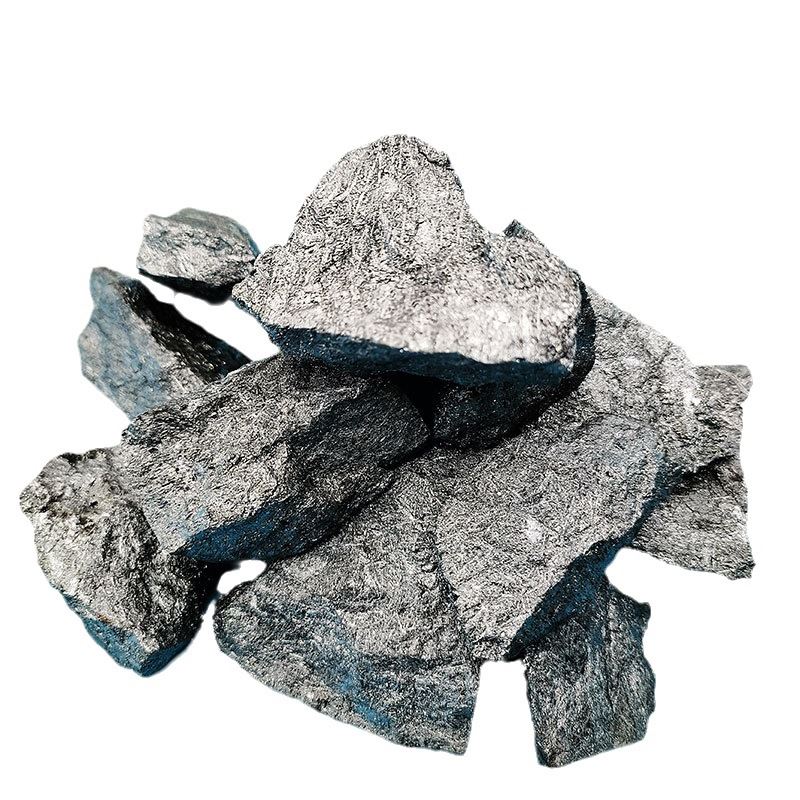

For special steel applications, Ferrosilicon For Special Steel with extremely high purity is required. Special steels, such as stainless steel and tool steel, have specific performance requirements, and even small amounts of impurities can have a significant impact on their properties. High - purity ferro silicon helps to ensure that these special steels meet the strict quality standards.
In the production of semiconductors, High Purity Ferrosilicon is used as a raw material. Semiconductors require materials with very low levels of impurities to function properly. Any impurities in the ferro silicon can affect the electrical properties of the semiconductor, leading to reduced performance or even device failure.
As a ferro silicon supplier, I understand the importance of providing high - quality products. That's why we use a combination of the methods I've mentioned above to ensure the purity of our ferro silicon. We have a state - of - the - art laboratory where our samples are analyzed regularly. Our quality control team is well - trained and experienced in conducting these tests to guarantee that our products meet or exceed the industry standards.
If you're in need of high - quality ferro silicon for your business, whether it's for steelmaking, casting, or semiconductor production, don't hesitate to reach out. We're here to provide you with the best ferro silicon products and support. Contact us to start a procurement discussion and find out how we can meet your specific requirements.
References
- "Introduction to Analytical Chemistry" by Douglas A. Skoog, Donald M. West, and F. James Holler
- "Spectroscopic Methods in Analytical Chemistry" by B. K. Sharma
- "Handbook of Ferroalloys" by J. F. Elliott and M. Gleiser


