


High Vanadium Iron Vanadium
Products Description
The intermediate alloy of iron and titanium obtained by reduction (fe-vanadium binary alloy) has a vanadium content of not less than 35.0%(weight) and not more than 85.0%(weight). Vanadium as a member of the vanadium group in the periodic table of elements, its atomic number is 23, atomic weight is 50.942, melting point is 1887 degrees, boiling point is 3337 degrees, pure vanadium is shiny white, hard texture, for the body-centric three-dimensional mechanism. About 80% of vanadium is an alloying element in steel, along with iron. Steel containing vanadium is very hard and strong, but generally its vanadium content is less than 1%.
Smelting process
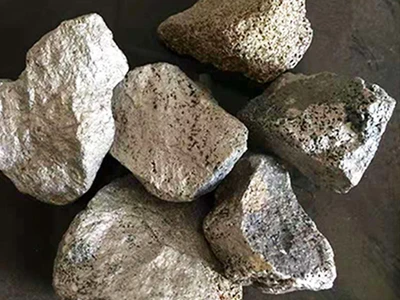
The flake vanadium pentoxide by electrosilicothermic process is made of 75% ferrosilicon and a small amount of aluminum as reducing agents in basic arc furnace through two stages of reduction and refining. During the reduction period, all the reducing agent of one furnace and the flake vanadium pentoxide accounting for 60~70% of the total amount are loaded into the electric furnace, and silicothermal reduction is carried out under high calcium oxide slag. When the V2O5 in the slag is less than 0.35%, the slag (called lean slag, which can be discarded or used as building materials) is released and transferred to the refining period. At this time, the flake vanadium pentaoxide and lime are added to remove excess silicon and aluminum in the alloy liquid, and the ferroalloy composition meets the requirements, and the slag can be removed. The slag released after refining is called rich slag (containing V2O5 up to 8~12%), which is returned to use when the next furnace begins to feed. The alloy liquid is generally cast into a cylindrical ingot, which is finished after cooling, stripping, crushing and slag cleaning. This method is generally used for smelting iron vanadium containing 40~60% vanadium. The recovery rate of vanadium can reach 98%. Refining each ton of iron vanadium consumes about 1600 kW · h of electricity.
Aluminum is used as reducing agent in thermite process, which is smelted by lower ignition method in the furnace barrel of basic furnace lining. A small part of the mixed charge is first loaded into the reactor, that is, ignition. After the reaction begins, the rest of the charge is added gradually. It is usually used for smelting (containing 60~80% vanadium), and the recovery rate is slightly lower than that of electrosilicothermal method, about 90~95%.
Product Picture

Our factory

workshop

workshop

workshop

workshop
You Might Also Like


Send Inquiry