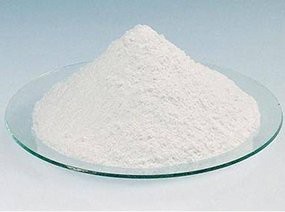
Hey there! As a supplier of Silicon Carbide 90%, I often get asked some interesting questions about this material. One of the most common ones is, "Is 90% Silicon Carbide magnetic?" Well, let's dig into this topic and find out.
First off, let's understand what Silicon Carbide 90% is. Silicon Carbide 90% is a high - quality form of silicon carbide where 90% of the material is pure silicon carbide, and the remaining 10% could be other elements or impurities depending on the manufacturing process. It's widely used in various industries, from abrasives to electronics, because of its excellent hardness, high thermal conductivity, and chemical stability.
Now, let's talk about magnetism. Magnetism is a property of certain materials that can attract or repel other magnetic materials. There are different types of magnetism, like ferromagnetism (the kind you see in magnets on your fridge), paramagnetism, and diamagnetism.


Silicon carbide itself is a covalent compound made up of silicon and carbon atoms. These atoms are held together by strong covalent bonds, which means the electrons are shared between the atoms in a very stable way. Generally, substances with covalent bonds don't have unpaired electrons, which are crucial for ferromagnetism. Ferromagnetic materials have large numbers of unpaired electrons that can align their spins in the same direction, creating a magnetic field.
In the case of 90% Silicon Carbide, the high - purity silicon carbide part is diamagnetic. Diamagnetic materials create a magnetic field in the opposite direction of an applied magnetic field, but this effect is very weak. When you put a diamagnetic material in a magnetic field, it will be slightly repelled. However, this repulsion is so small that it's hardly noticeable in everyday situations.
The remaining 10% of the 90% Silicon Carbide might contain some impurities. These impurities could potentially introduce some magnetic properties. For example, if there are trace amounts of iron or other ferromagnetic elements in the impurities, then the material might show some weak ferromagnetic behavior. But in most high - quality Silicon Carbide 90% products, the amount of such impurities is kept very low, so the overall magnetic effect is still negligible.
Let's take a look at some real - world applications. In the abrasives industry, Silicon Carbide 90% is used to make grinding wheels and sandpapers. The non - magnetic property of silicon carbide is actually an advantage here. If the abrasive was magnetic, it could attract metal particles during the grinding process, which would contaminate the workpiece and reduce the quality of the finish.
In the electronics industry, silicon carbide is used in semiconductors. The non - magnetic nature of silicon carbide is crucial because magnetic materials can interfere with the flow of electrons in electronic circuits. A magnetic semiconductor would cause all sorts of problems with signal transmission and processing.
Another important aspect is the particle size of Silicon Carbide 90%. The Silicon Carbide Particle Size 0 - 10 is often used in different applications. The particle size doesn't really affect the magnetic properties of silicon carbide. Whether the particles are large or small, the basic magnetic behavior of the silicon carbide remains the same. However, smaller particles might have a larger surface - to - volume ratio, which could potentially expose more of the impurities on the surface. But again, as long as the impurities are well - controlled, the magnetic effect won't change significantly.
There's also a historical aspect to silicon carbide. It was first synthesized in 1891 by Edward Goodrich Acheson, who named it Carborundum. At that time, the focus was more on its abrasive properties rather than its magnetic properties. Over the years, as technology advanced, the applications of silicon carbide expanded, and the understanding of its various properties, including magnetism, became more in - depth.
So, to answer the question "Is 90% Silicon Carbide magnetic?" The answer is that the high - purity silicon carbide part is diamagnetic, and the overall material is generally non - magnetic or has extremely weak magnetic properties due to the low - level impurities.
If you're in an industry that requires non - magnetic materials, like electronics or precision manufacturing, 90% Silicon Carbide could be a great choice. It offers the benefits of high hardness, good thermal conductivity, and chemical stability, all without the unwanted magnetic interference.
If you're interested in purchasing 90% Silicon Carbide for your business, I'd love to have a chat with you. Whether you need it for abrasives, electronics, or any other application, we can discuss your specific requirements and find the best solution for you. Just reach out, and we can start the procurement process.
References:
- "Introduction to Solid State Physics" by Charles Kittel
- Various scientific research papers on the properties of silicon carbide compounds.